Created by Dominic Minghella and Foz Allan
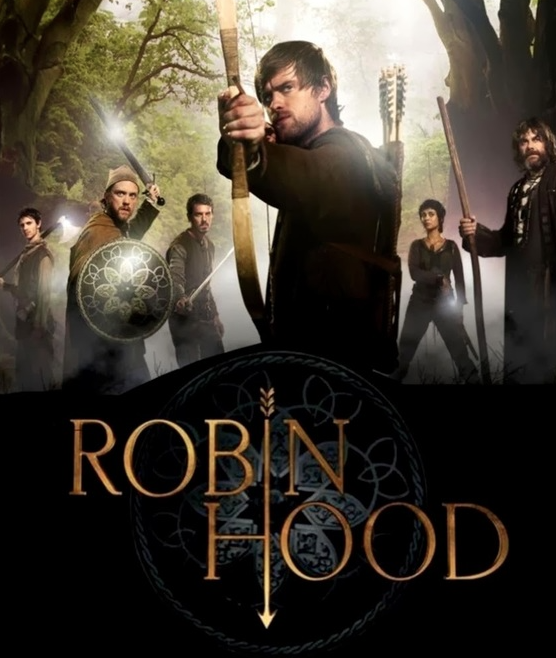
Starring Jonas Armstrong, Lucy Griffiths, Richard Armitage and Keith Allen
(Tiger Aspect for BBC One)
Airdates: October 6, 2007 - December 29, 2007
Originally I only wrote a review of the first series.
I have added a review of the later seasons in honour of the show's 20th anniversary. I feel the second season was the strongest of the show's run.
(And yes, I have generally used the North American term "season" rather than "series" here.)
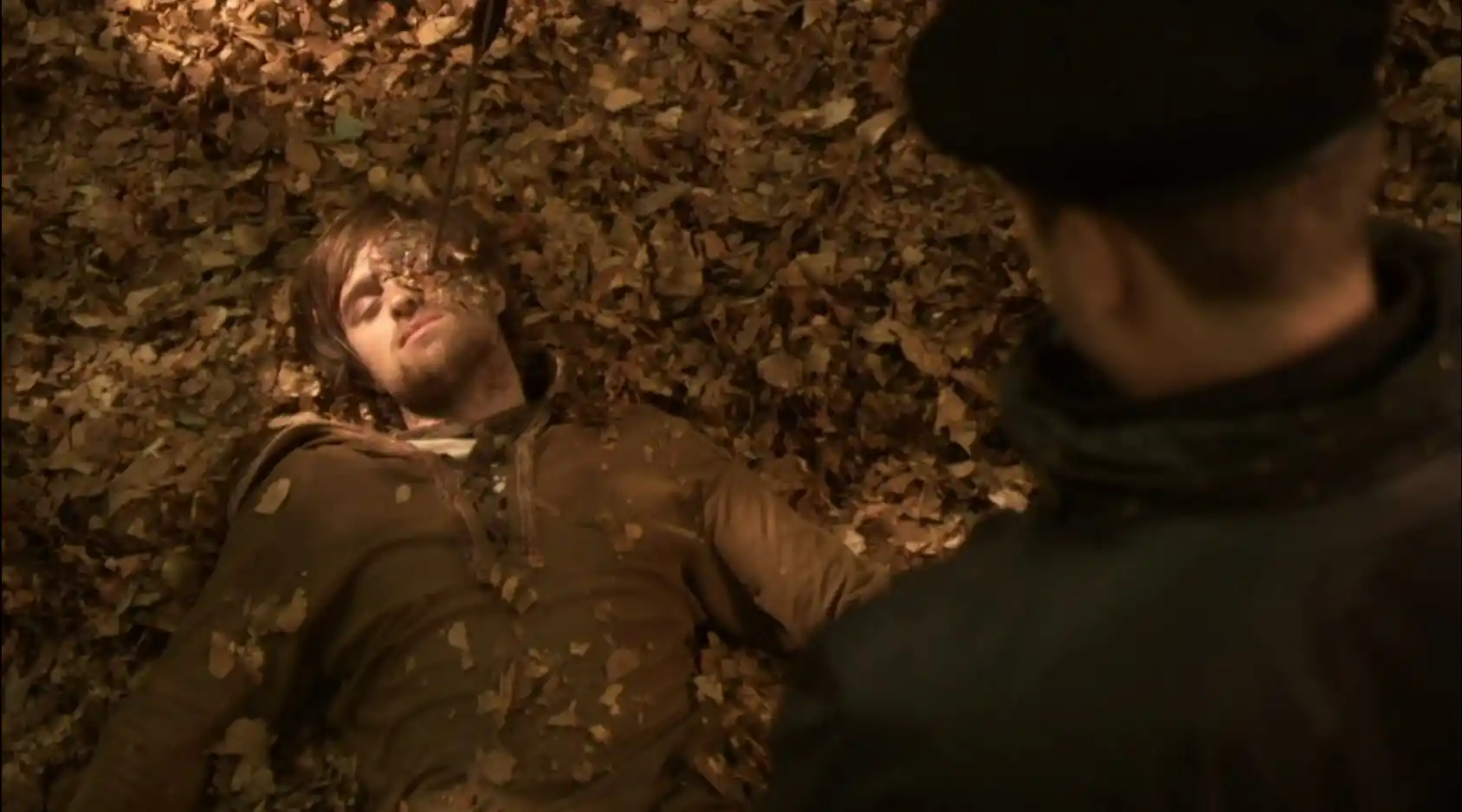
The season begins with a shot of Sherwood Forest with the greenwood looking as green as ever. But when it pans down to the ground, we see the dry brown leaves of autumn. And amongst the leaves is Robin Hood -- apparently killed by an arrow in the eye. The image evokes the much-debated tale that the last Saxon king Harold was killed by an arrow to the eye.
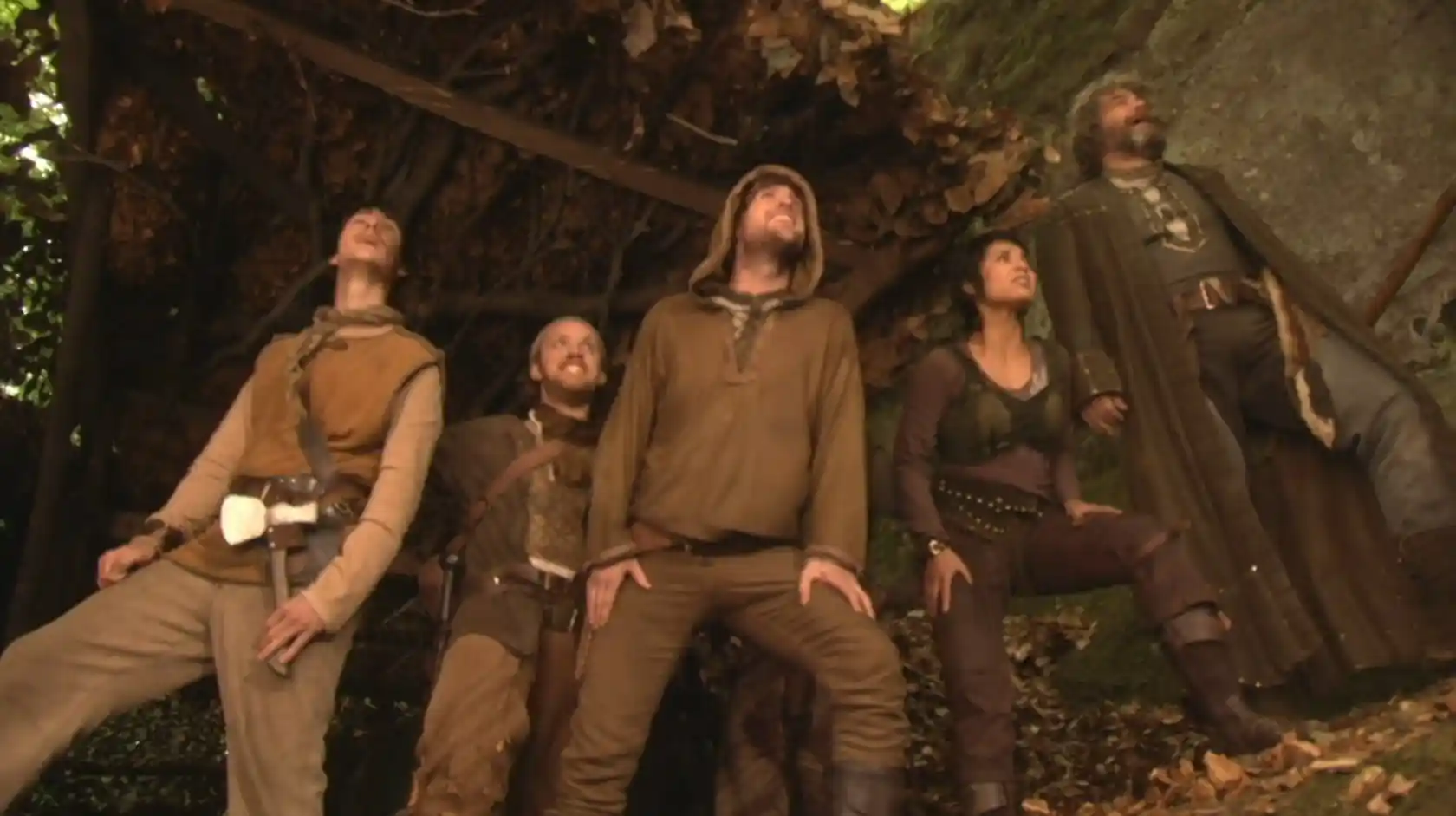
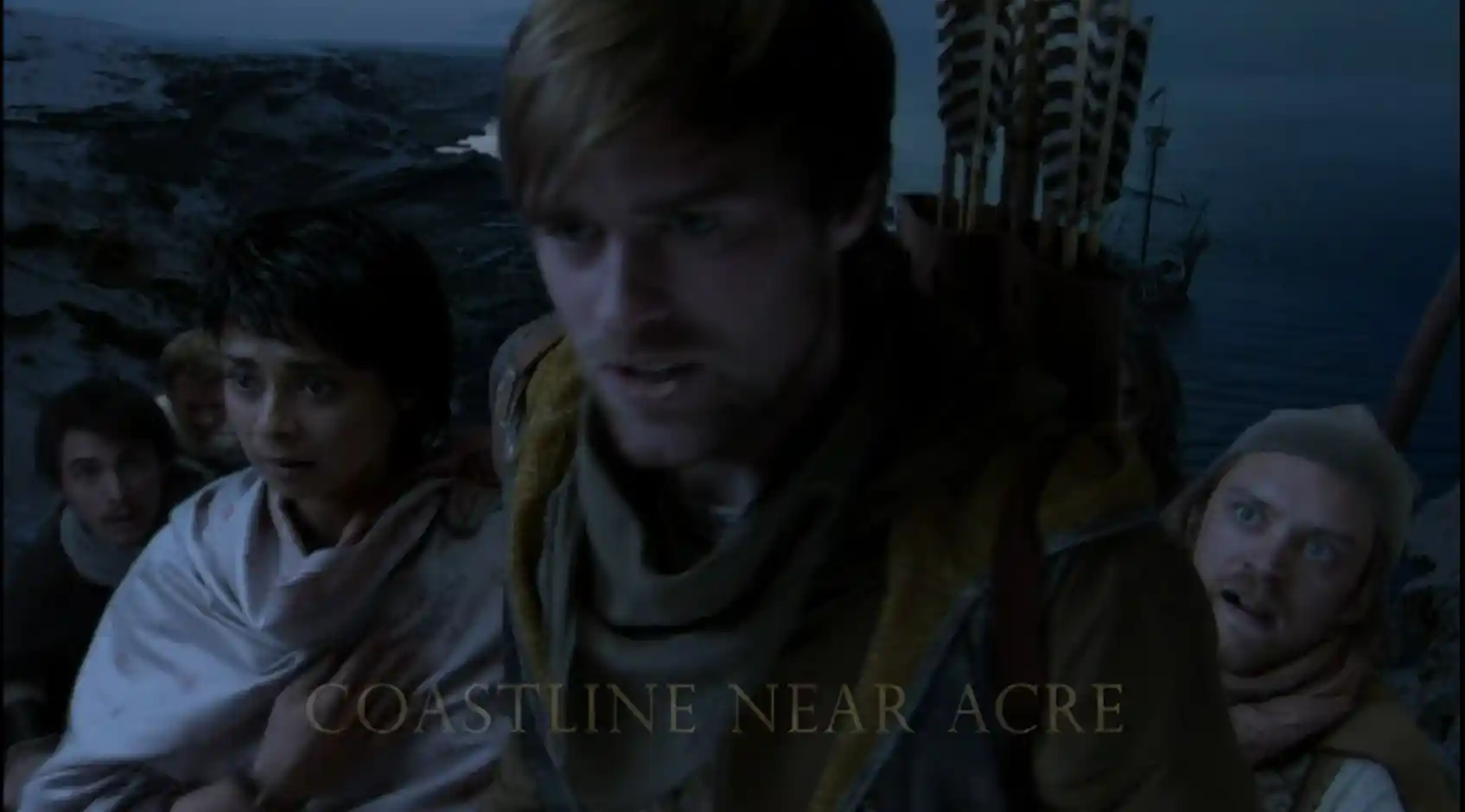
Of course, it's a ruse, Robin is luring a stranger into the ambush. He arises -- uninjured -- and ready to begin a new series. The other outlaws appear -- and they state their intentions for both the new travellers in the forest and for the returning television audience members at home.
ROBIN: This is an ambush.
DAVINA: You don't say.
MUCH: This is how it goes.
WILL: There's poor people going hungry.
ALLAN: You tell us what you've got.
DJAQ: Be honest with us...
MUCH: And we take one-tenth.
WILL: So the poor can eat.
LITTLE JOHN: Lie.
MUCH: Or resist.
ROBIN: And we take it all. So, what's it going to be?
-- "Sister Hood", written by Dominic Minghella
All of the outlaws take part in the address. A good re-introduction for everyone. The idea of a truth test has been a part of Robin Hood's robberies since the late-medieval ballad A Gest of Robyn Hode.
The strangers resist and a short fight ensues. One of the soldiers grabs Djaq and declares "I've got the girl". Djaq's short hair is styled more femininely than the previous series. And she corrects the soldier about one small detail. "A woman, you'll find."
The outlaws seemingly vanish into the forest.
Then, the floor of leaves opens up to reveal a secret door. Much praises Will's carpentry skills as "genius" and enthusiastically declares "I love our camp!"
A declaration which would have a double meaning as the show retains many of its camp elements.
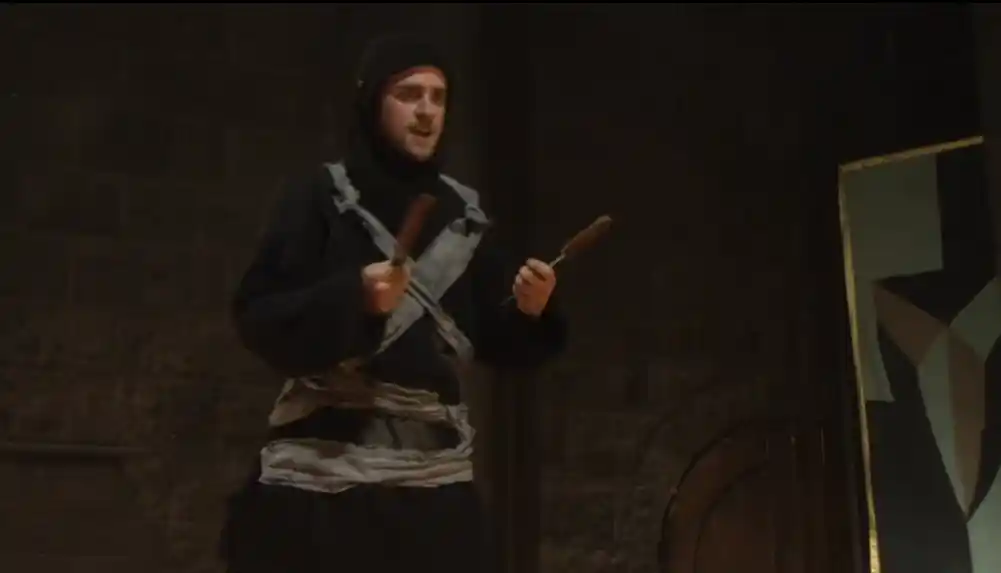
Among the camp elements is guest star Sara Stewart as the sheriff's equally villainous sister Davina, a sadist who carries a whip and a trunk full of snakes. (She ends up being bitten by one of them.)
The first episode does a good job in showing how things have changed from the first series.
The Sheriff of Nottingham is now the head of a group known as the Black Knights and operation Shah Mat -- the original Persian form of "Checkmate", which Robin translates as "kill the king".
At the end of the first series, Robin moved on from his aversion to killing. And the show quickly supplies a reason why the now lethal Locksley just doesn't kill Sheriff Vaisey. The Black Knights are working for Prince John, and the prince has sworn to burn Nottinghamshire to the ground if the sheriff should die an unnatural death.
While there are still obstacles to Marian going Robin in the forest full time (looking after her father), the second season does not walk back the character development at the end of the first season. Robin and Marian now express their feelings for each other. Of course, Marian's actions at the end of last season do mean that she and her father have lost standing with Gisborne and the Sheriff.
The final episodes of the first series had Allan and Will temporarily leave the band to strike it rich. Will is fully reformed from his brief side hustle, but Allan is not.
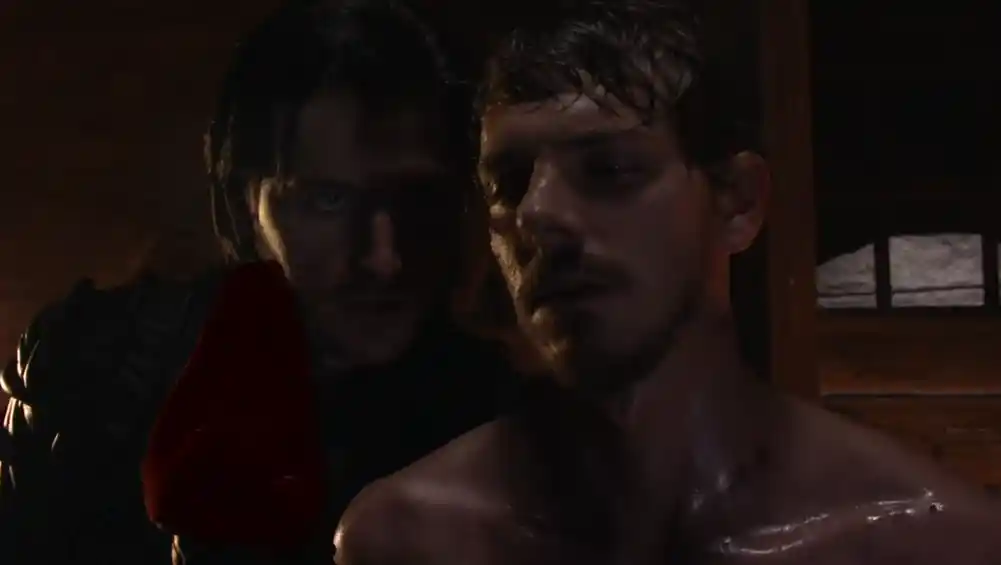
Allan breaks away from Robin to try to earn some extra cash at the tavern with a variation on the shell game. He's caught and tortured by Gisborne. Then Gisborne offers a different sort of arrangement. He suggests Allan gives information for money -- with some limits. "I am not robbed. Robin is not killed. You'd be doing both of us a service."
As Allan returns to the camp, Robin is explaining how vital the gang is.
MUCH: Well, if we've learnt one thing from today, it's that you are never going to go to Nottingham on your own, again, ever. Because if you'd have died, especially now...
ROBIN: If I had died, Much, or if I die tomorrow...you will carry on without me.
MUCH: How? We are Robin Hood's men.
ROBIN: No, you are Robin Hood.
MUCH: What?
ROBIN: You are Robin Hood. And [points to Djaq] you are, and [points to Little John] you are. [turns to Will] All of you! We are not just six outlaws in the forest. [Allan arrives outside the camp] We are the spirit of England and that lads, that is this country's only hope.
[Allan walks in]
ALLAN: Ay up, lads.
DJAQ: What happened to you?
ALLAN: Oh, tricked one punter too many.
MUCH: I could have told you that. Here. [hands Allan a cup]
LITTLE JOHN: We are Robin Hood.
ALLAN: What?
MUCH: Just say it.
ALLAN, ROBIN, WILL, MUCH, DJAQ, LITTLE JOHN: :[holding their cups up] We are Robin Hood!
[The gang smile and drink and as Allan takes his drink, the bag of money from Gisborne in exchange for Allan spying is seen hanging from his trousers. He quickly covers it up and drinks]
“Sister Hood”, written by Dominic Minghella
The phrase and conception of the band being Robin Hood, rather than Robin of Locksley himself will recur several times over the course of the show.
Allan's corruption and ultimate redemption is perhaps the most striking story arc of the season -- and the whole show.
Allan continues to visit Gisborne, selling Robin’s secrets in exchange for cash. Now, to be fair, he steadfastly refuses to betray Marian’s affliliation with the outlaws, nor does he reveal the outlaw camp. But he is willing to sell out Robin’s cause and help scuttle his leader’s efforts to save the king.
Thanks to Allan’s information, Gisborne has Robin’s messenger to the king murdered. This troubles Allan, but he keeps up his arrangement with Gisborne.
In the fifth episode, “Ducking and Diving", Robin deduces he has a spy in his camp. The outlaw leader gives the spy one chance to come forward and confess. Allan doesn’t take that chance.
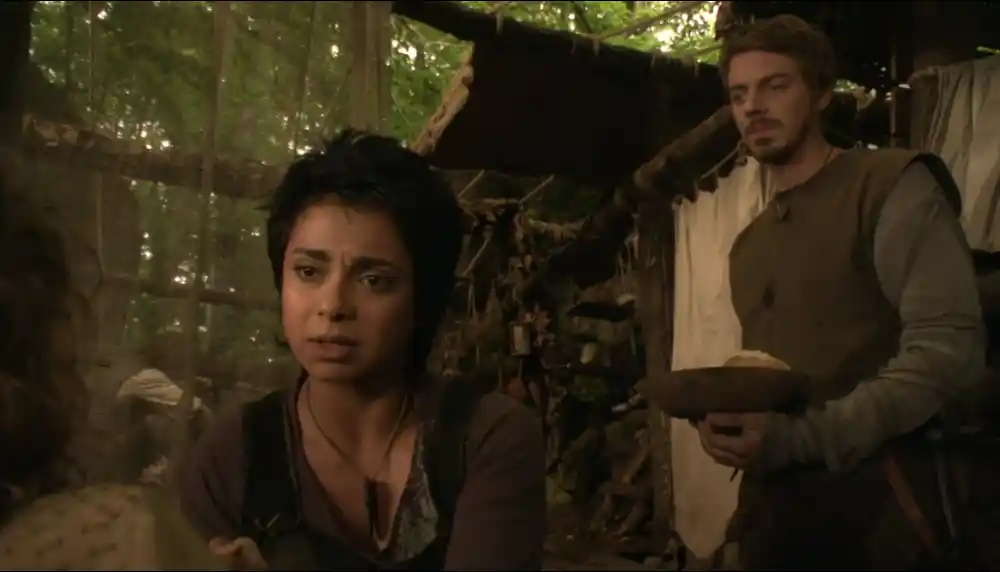
Djaq, who has a bond with Allan, figures out that he’s the most likely suspect and they have a conversation.
DJAQ: There's a spy in the camp. How can anything be alright?
ALLAN: He probably knows he's made a mistake now.
DJAQ: He had his chance to confess.
ALLAN: Maybe he's stuck. People get stuck, y'know.
[Pause]
DJAQ: Your brother said he was stuck. He refused to change and he hanged for it.
ALLAN: He was an idiot.
DJAQ: [Emotionally] No! He was a good man underneath it. And you saw that. I believe Robin would see it too. If the spy confessed...and begged for forgiveness. If he changed his ways.
[Pause]
[Djaq turns to face Allan]
DJAQ: I believe you're a good man, Allan A Dale.
— "Ducking and Diving", written by Debbie Oates
The performances of Joe Armstrong and Ajali Jay are notably strong in this scene.
The friendship between Djaq and Allan is interesting. She clearly likes him despite his faults. But Djaq’s primary romantic interest is Will Scarlett. And her friendship with Allan never pushes into a full-blown romantic triangle like the one between Robin, Marian and Guy. Allan never demands a relationship with Djaq, and Will remains his closest male friend in the outlaw gang. It serves as a more healthy counterpoint to Guy’s obsessive and possessive interest in Marian.
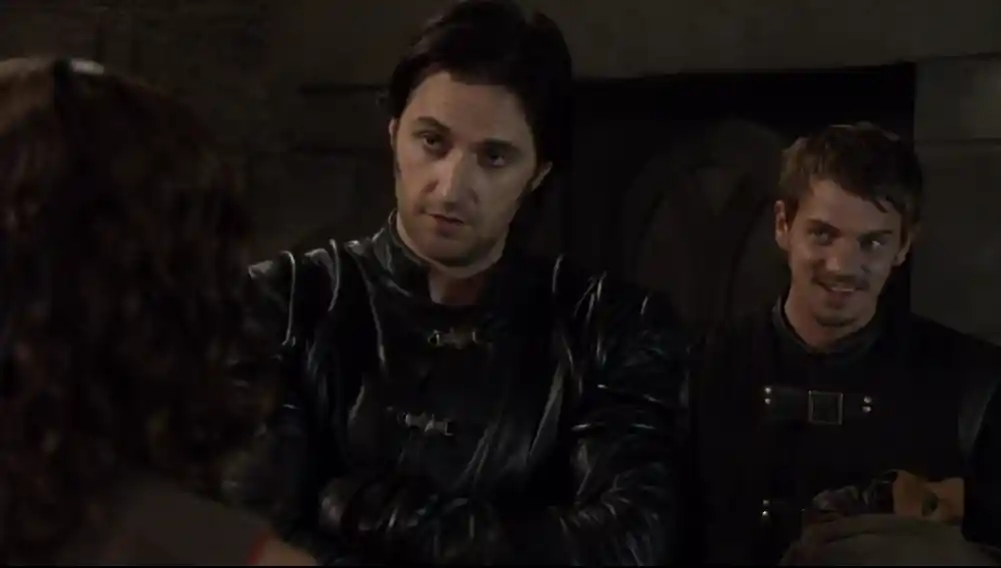
When Robin discovers that Allan is the traitor, he’s cast out of the gang and instead goes to work directly for Gisborne as his new black-clad henchman … and friend?
Last season, characters observed that Robin Hood just wants to be loved. It’s not only Robin Hood’s defining trait. Allan’s limits on his betrayal were always about protecting his friends. And despite everything he’s done, Allan wants to rejoin the outlaws. Allan may not fully value Robin’s cause, but he does value the friendship of the band. And once that’s taken from him, he starts to find friendship with Gisborne.
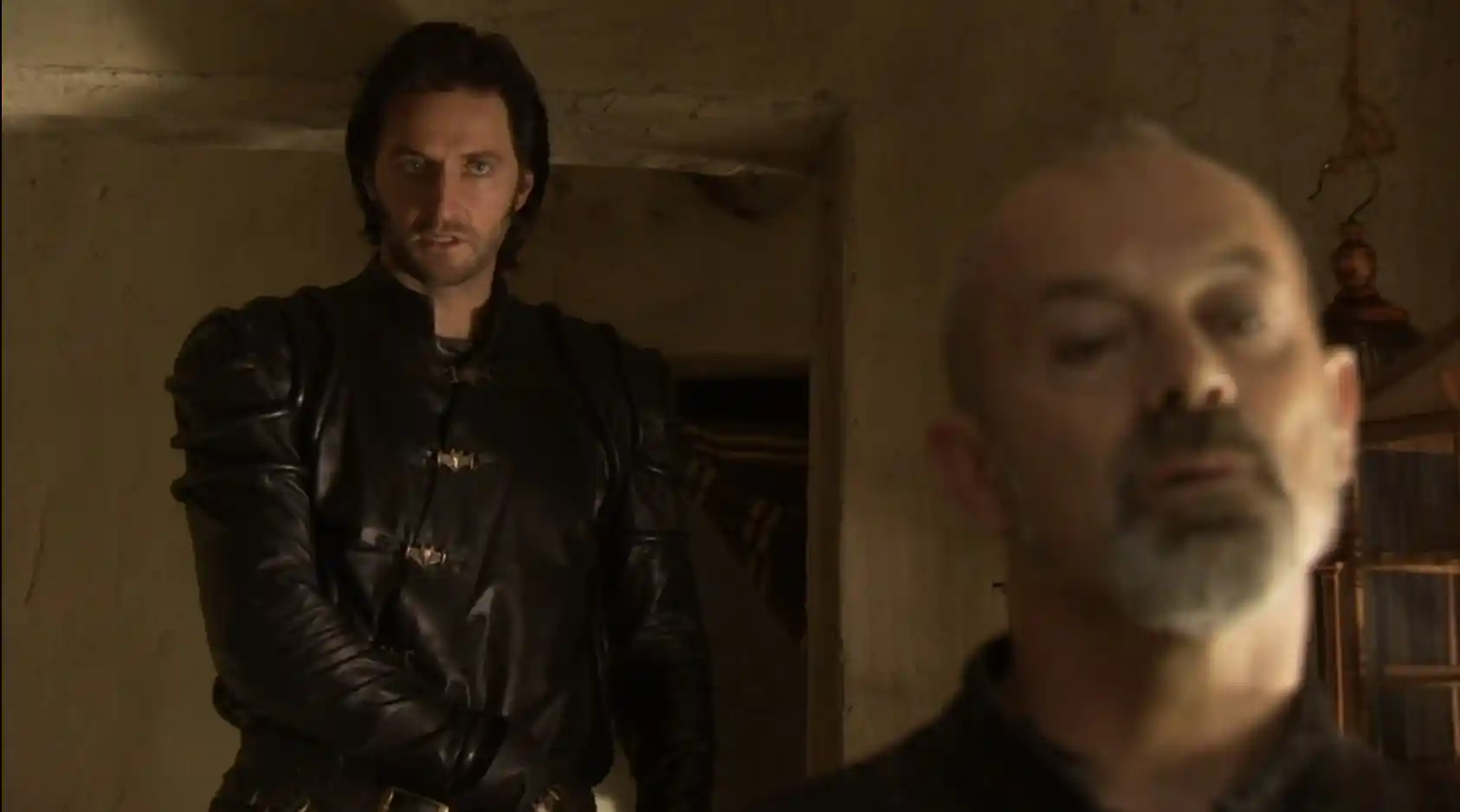
At the beginning of their arrangement, Guy of Gisborne suggests that he and Allan are similar. “You and I, we’re the ones who make our supposed betters look good. They take us for granted.”
The season continues to develop the bond between these two.
In the episode “For England…!”, Robin attempts to take out the Black Knights — clad in an absurd ninja/commando style outfit. Characters such as Allan may drift into moral shades of grey, but the show never lets go of its identity as light, Saturday evening entertainment. At least not until the season finale.
And yet, while the Sheriff’s plot to kill the king drives the show’s action. The audience’s attention is on the characters. And the shifting nature of the plot has a particular effect on Marian.
It is a common trope to keep Marian somewhat removed from the outlaw gang. The Marians of the 1938 movie and the 1950s TV series also serve as spies. And in the first season and a half, Lucy Griffiths’s Marian was also part of this trope.
In a way, Allan A Dale is a reflection of Marian — both spies in their respective camps
Marian’s father Edward is killed in the episode “Show Me the Money”. And with his death, her main motivation for staying in Nottingham is gone.
In the episode “Get Carter!”, we see Marian awkwardly integrate into Robin’s gang. It’s not that she needs to learn how to fight — we’ve seen that Marian in her role as the Nightwatchman is a capable fighter. But she was a lone superhero. Now, she needs to function within a team. Also, Robin is not sure if she should publicly be one of the gang.
Robin’s desire to keep Marian’s allegiances secret pays off one episode later when Marian’s status quo changes yet again.
”Lardner’s Ring” is an interesting episode. The episode’s title and some elements within serve as a tribute to Ring Lardner, Jr. — the blacklisted American writer who wrote much of the 1950s The Adventures of Robin Hood under pseudonyms. In this case, Lardner is the king’s carrier pigeon and the outlaws can send a message to the king in its ring.
The pigeon nature of Lardner allows for a different sort of tribute. When the Sheriff declares “Catch that pigeon. Now!”, it sounds very much like Dick Dastardly in the opening song of the 1960s cartoon Dastardly and Muttley in Their Flying Machines who shouts “Stop that pigeon. Now!”
The episode’s tributes to the sublime and the ridiculous aside, the most important developments come between Robin and Marian. Early in the episode, Robin gets on his knee and proposes. Marian agrees to the following plan. “So, we find Lardner and bring the king home. Defeat the sheriff. And get married.”
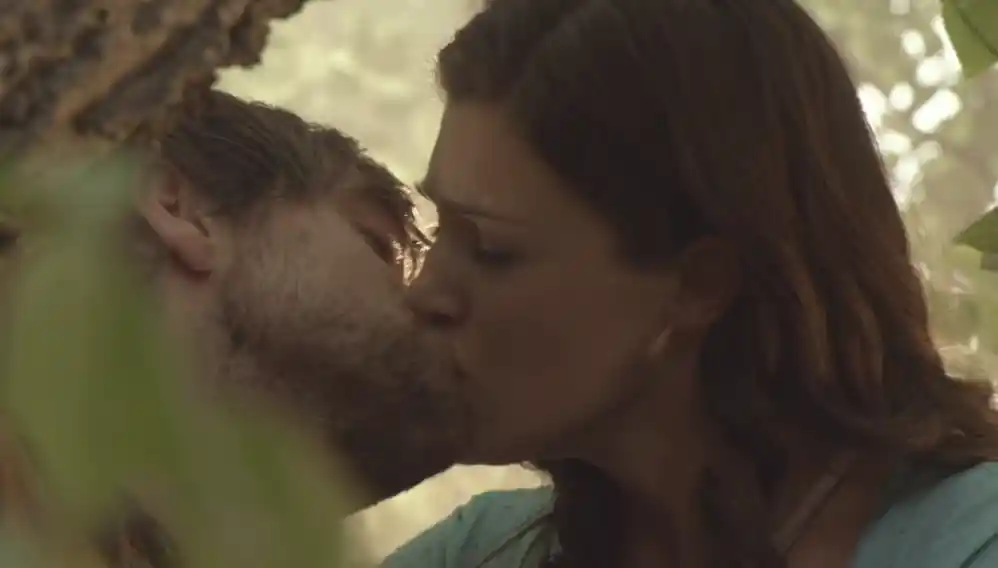
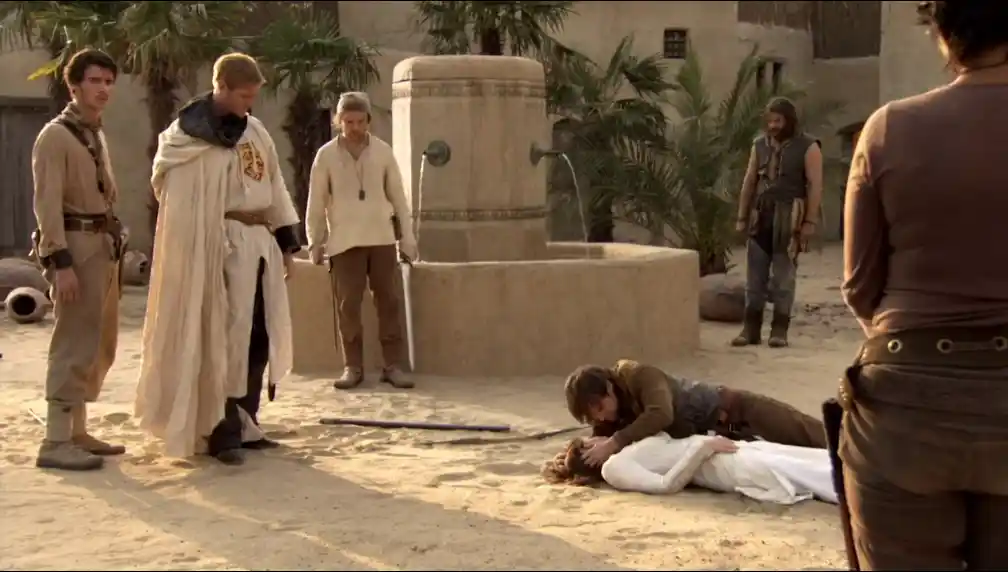
Unfortunately, as events transpire, the newly engaged couple find themselves trapped in a tree, and the only way to get out of the situation is for Marian to pretend that she is Robin’s hostage and to be “rescued” by Gisborne.
If the season has seen the corruption of Allan A Dale, Marian’s return to Nottingham teases at the possible redemption of Guy of Gisborne.
In “Walkabout”, the sheriff wanders into the forest and misses his scheduled meeting with Prince John’s envoy. Earlier in the season it was established that if the sheriff dies, the prince will exact his revenge on the whole county. Gisborne and Robin Hood have until sundown to recover the missing sheriff.
However, Guy of Gisborne is told he does not have to die like the rest of the town. Members of the Black Knights are exempt from Prince John’s edict — members of the Black Knights … and their families. Gisborne has rediscovered his feelings for Marian and wants to save her. But she refuses to become his instant bride and leave everyone else to their fate.
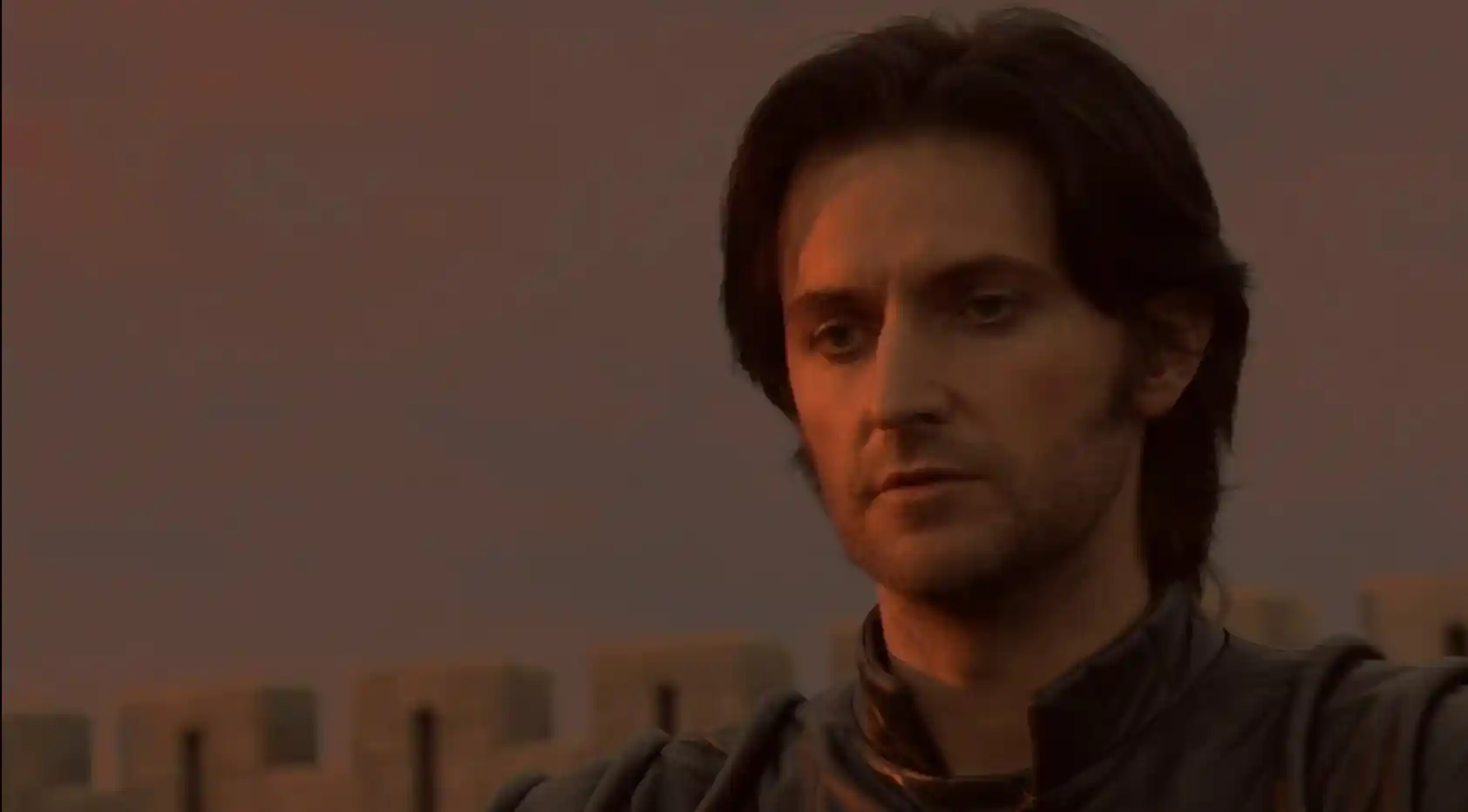
Gisborne leaves, and then turns back. He decides he’d rather die fighting at the sheriff’s side rather than go through with life without her. (“Without her, my world may as well turn to ash.”) Of course, Richard Armitage plays this with Byronic intensity that captures the hearts and minds of many viewers.
“Treasure of the Nation” by Simon J. Ashford is a fun romp where the outlaws and the sheriff compete in a quest — visiting various legendary placenames such as Hathersage, Kirklees and Barnsdale — to find a treasure … who turns out to be the Queen Mother (“less of the mother, thank you”) Eleanor of Aquitaine played with relish by Lynda Bellingham.
But again, the episode’s true heart rests with the characters of Gisborne, Marian and Allan.
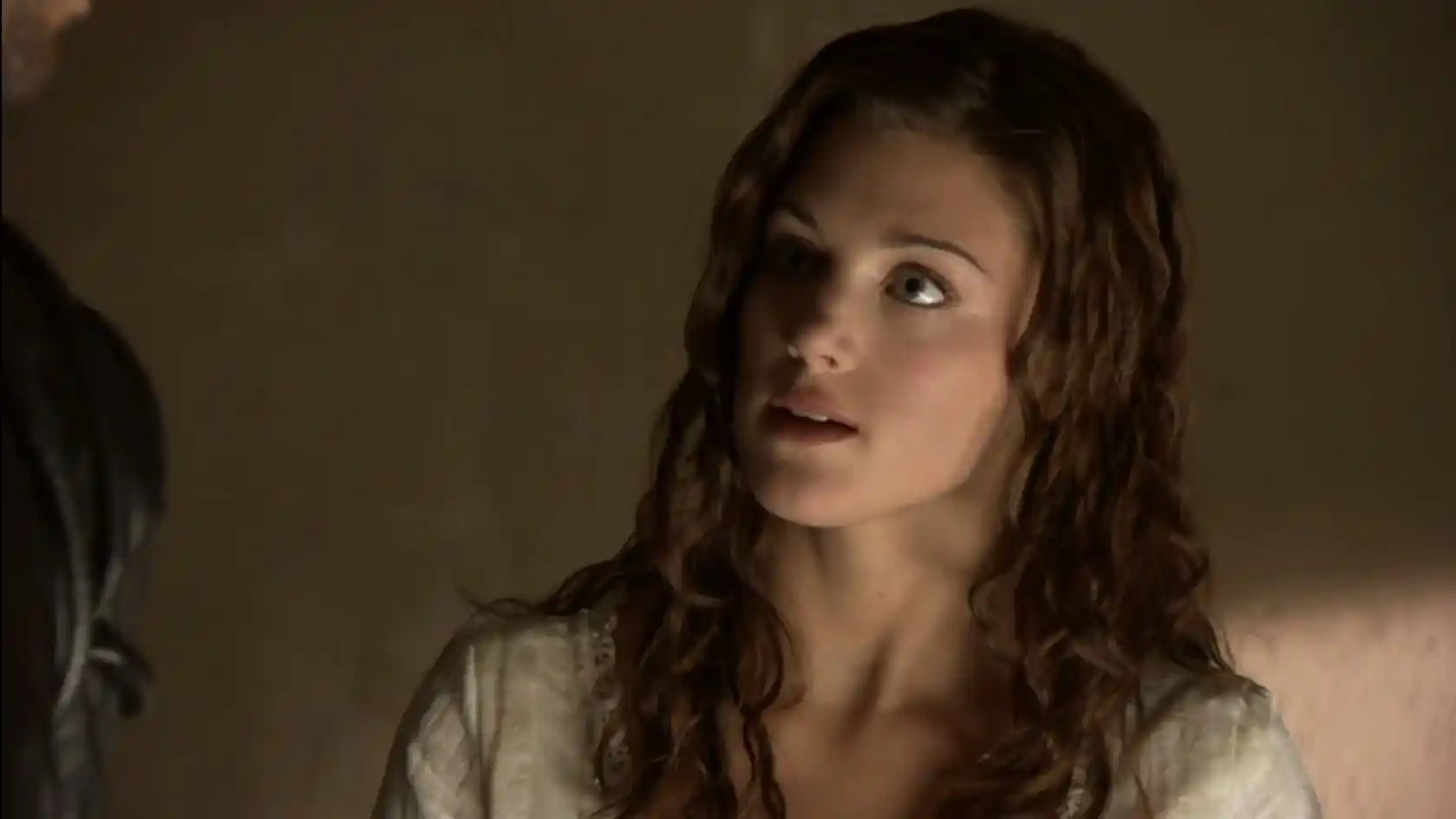
Gisborne captures and unmasks the Nightwatchman — and discovers that she is Marian. This revelation shatters his world. The first thing he does upon finding out is to fetch the knife he stabbed the Nightwatchman with last season and verifies that Marian has the scar from that encounter.
Feeling betrayed by Marian and bound by duty, he plans to have her executed and sends a message to the sheriff (off on his quest) that they have the Nightwatchman.
Gisborne struggles with his feelings. He asks her “Why did you have to put me in this position? Did you even once understand what I was feeling or thinking?”
When the sheriff shows up for the execution, he does not yet know Marian is the Nightwatchman. He greets Marian as if she’s come to watch the execution of someone else. Marian, and the audience, feel the tension. But just then the escaped Nightwatchman appears on the battlements — outwitting the guards.
This “Nightwatchman” is Allan in disguise, and he and Gisborne concocted this scheme to save Marian and preserve her secret.
A happy family that is not all alike
Marian agrees to stay
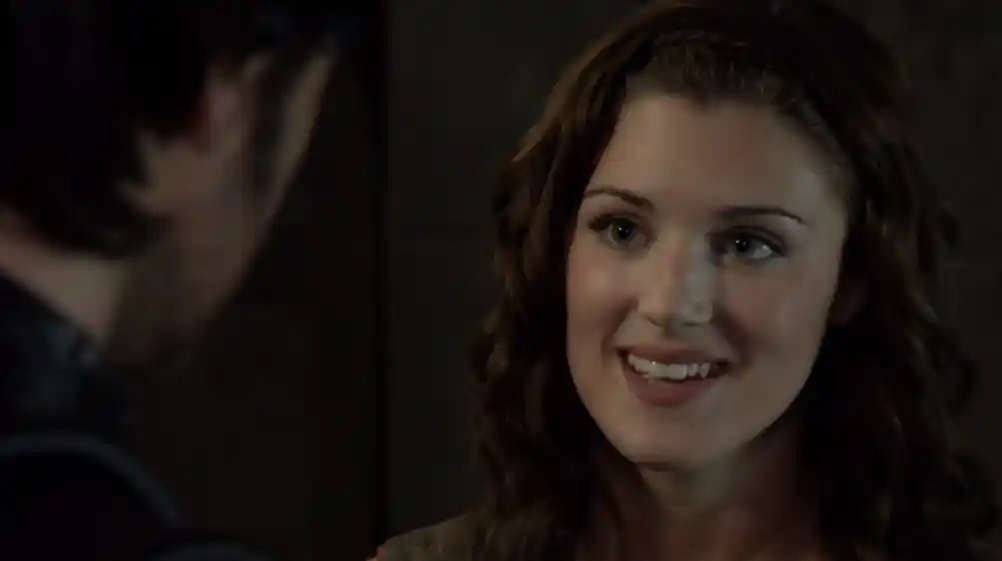
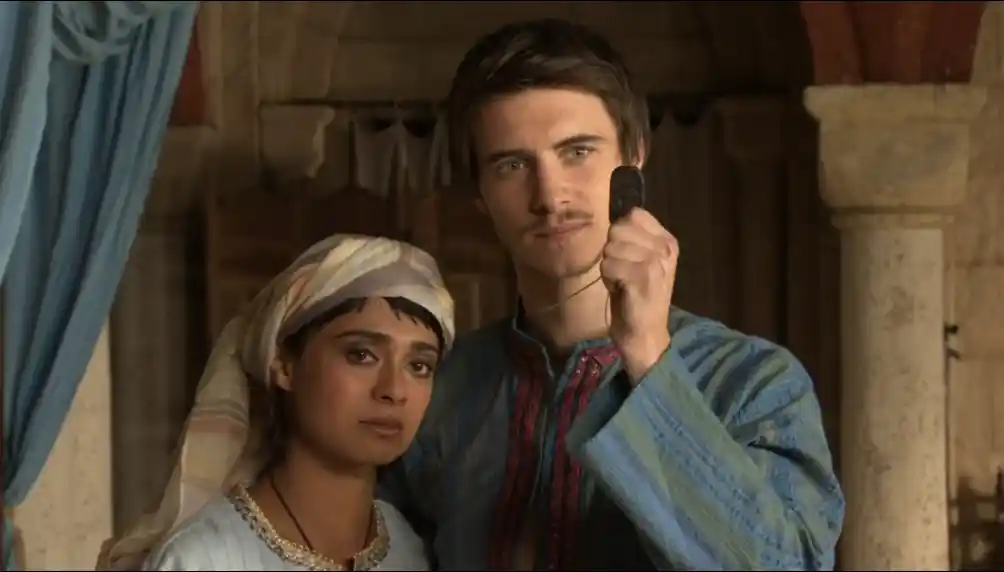
When Gisborne, Marian and Allan are alone together, she is smiling and asks “You did this for me?” And Allan quips “Well, what’s being chased by angry soldiers between friends, eh?” Allan is smiling and joking — to him it feels like he found yet another surrogate family in this trio.
When Allan leaves, Guy asks a favour of Marian. “Stay and make this place bearable.” She agrees and hugs him.
Gisborne has been given false hope. Marian certainly cares for him on one level — but not the way he’d like. And yet, even though Gisborne has “done the right thing” — it’s all been in service of his love of Marian.
I am reminded of T.S. Eliot’s lines from the 1935 play Murder in the Cathedral. “The last temptation is the greatest treason: / To do the right deed for the wrong reason.”
The season’s penultimate episode “A Good Day To Die” by showrunner Dominic Minghella has a very classic structure. The outlaws are trapped by the sheriff’s mercenaries. The outlaws spend what they expect to be their last night confessing their feelings. (The episode establishes that Robin Hood's birthday in the show is October 14. Not coincidentally, this article is first published on October 14, 2026.)
Djaq and Will admit their love for each other. Little John expresses his guilt over leaving his wife Alice and son Little Little John. Much expresses his frustrations with Robin.
And Robin admits why he hasn’t been able to fully connect with Much.
ROBIN: And Much, I have betrayed your friendship. But I think you know why. You see, I can't face the terrors we saw, I can't. Because I'm not as strong as you. I have to put them out of my mind, because if I don't, I wouldn't be able to lead. I mean, I wouldn't even be able to...
[pauses, laughs]
MUCH: ...what?
ROBIN: It doesn't matter.
LITTLE JOHN: ...to shoot.
MUCH: Shoot? Of course he can shoot!
ROBIN: No. No, John's right. In the Holy Land, the men we saw in bits... screaming... every time I raise my bow, I see them. I hear them. And I know now whether it was right or wrong, what we did in the Holy Land, it makes no difference. So I have to try not to kill. I have to avoid killing. I mean, God gave me a gift with bow. I can kill with my eyes closed. I mean, I can kill a man from a thousand yards, and I have to try everything in my power not to. And that's why I wasn't there for you in your hour of need, my friend. Because I have to let those memories go. I just have to be free.
— “A Good Day to Die” by Dominic Minghella
And yet the true exploration of character happens outside the crucible of this barn.
The sheriff’s plans to kill the king have been expedited. The sheriff, Guy and Allan are to leave for the coast. And it is here that we see the mettle of Gisborne, Allan and Marian tested.
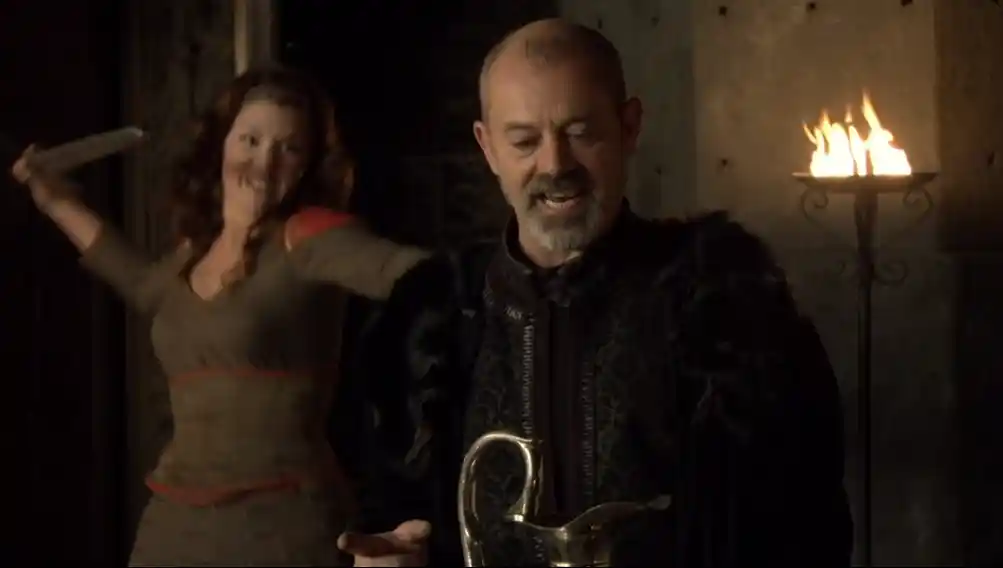
Marian asks Allan to help. He refuses at first, and rejects Marian’s argument that “If you go along with treason, then you are committing treason.” Without help, Marian tries to kill the sheriff herself. And she’d have succeeded. If her reflection hadn’t appeared in the sheriff’s polished jug.
Marian tries to kill the sheriff
Allan helps the gang
The jig is up. The sheriff now knows Marian’s true nature, and Gisborne confesses that she was the Nightwatchman. The sheriff announces she’s coming to the Holy Land with them as they execute the plan.
Marian repeatedly asks Allan for help, and he refuses saying he knows which side his bread is buttered on. But finally, he relents. He’s not able to free Marian, but he can leave to save Robin and the others from the mercenaries. Allan sacrifices wealth and power in order to save lives -- a choice not unlike the one Robin himself made when he saved Allan and the others back in the very first episode of the first season.
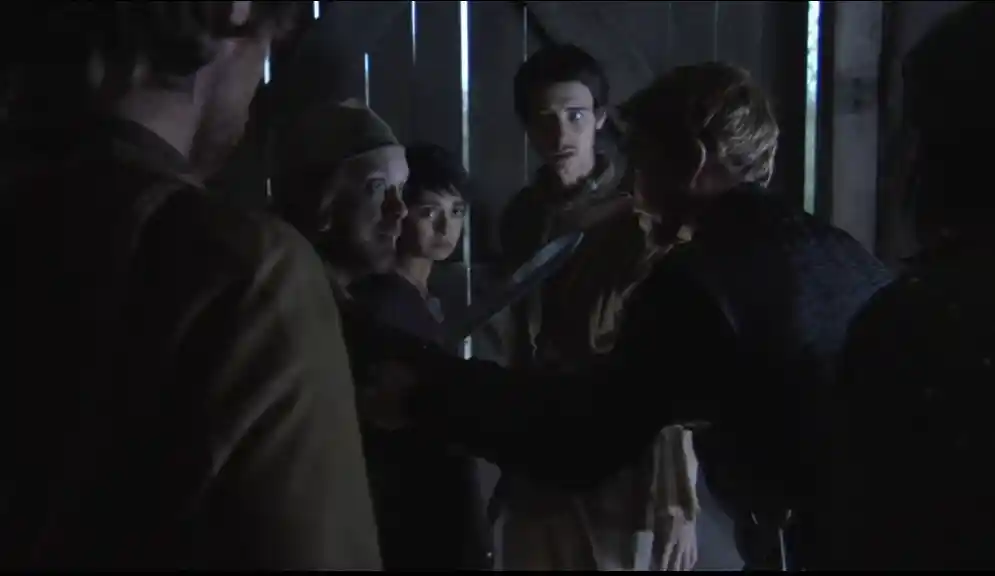
When Allan’s gift of the gab fails to convince the mercenaries to depart, Allan rejoins his old band for one desperate last fight. They manage to escape and head to the Holy Land for the season finale.
BBC One originally aired episode 12 and 13 on the same night. And so, the penultimate episode’s merits are often overlooked as the conversation was so dominated by the final episode of the season. And as far as a segment of the fandom was concerned, the final episode of the show.
The final episode of the season finds Robin and Much returning to the Holy Land, the Crusades, and the place where they received scars both physical and psychological. As this would be writer/co-creator's Dominic Minghella's final episode, it is appropriate to visit such an important place in the character's lives.
And we meet a character much-talked about -- King Richard. Guest actor Steven Waddington plays the warrior king as a ruler who fights alongside his men. Unfortunately for Robin, the king also appears to be a bit dense.
The reunion with the king is not a happy one for Robin. The sheriff has impostors pose as Saladin’s emissary. This villain named Nasir - a common enough name but it does make one think of Mark Ryan’s character from Robin of Sherwood - deceives King Richard into thinking that Robin is a traitor.
Richard orders that the outlaws are to die in the desert.
And at last, Robin delivers some criticism directly at the man he has served.
KING RICHARD: I’ll not remember you this way, Robin. I’ll remember you as the hero who once saved my life.
ROBIN: And I’ll remember you as the king who spent too long at war. It’s clouded your judgment. You’ve forgotten your people back home.
-- "We are Robin Hood", written by Dominic Minghella
King Richard does want to make peace, but that’s all part of the sheriff’s trap.
The exotic setting and the presence of the king should serve to elevate the story, but most viewers will be more interested in the drama with the regular characters, particularly Marian and Guy.
Marian makes Guy an offer. "If you save the king, I will willingly give you my hand." It is the reverse of what Gisborne had offered Marian in "Walkabout" as he pressured her for marriage as he tried to save her and later all of Nottingham from destruction.
But there, Gisborne was offering to do the right thing in exchange for something in return -- a personal favour. Here, Marian is offering a favour -- something she would consider a sacrifice -- in order to accomplish a higher cause.
It would be like looking into a twisted mirror. And Gisborne does not rejoice. Instead, he considers the implications.
She speaks to him again.
MARIAN: Have you thought about what I said? You are a decent man, Guy. And not a killer. Turn against the sheriff. This is your chance -- your last chance to be a good man.
-- "We are Robin Hood", written by Dominic Minghella
Marian offers Guy his last chance to be a good man
Gisborne considers killing the sheriff
The sheriff brings Marian to die in the desert alongside Robin Hood. The lovers begin to recite their wedding vows in the face of what appears to be certain death, which becomes a little more uncertain when they are rescued.
The season finale has many reversals of fortune. The sheriff shoots King Richard in the back. Gisborne advances to finish the king off. And in this moment, it is not Robin Hood who steps forward to save the king, but Marian.
MARIAN: Stop! It's over, Guy.
[Gisborne keeps walking forward and Marian walks back]
GISBORNE: Get out of the way.
MARIAN: All this time I've been fighting for England. Do you think I'm going to let you kill England?!
GISBORNE: Marian, GET OUT OF THE WAY! [As he says "GET OUT THE WAY" he swings his sword]
MARIAN: You'll have to kill me first.
GISBORNE: No. We're going to get out of this. I'll do this thing. Then I will have power beyond belief. And we will be together.
[Marian laughs]
MARIAN: I would rather die, than be with you, Guy of Gisborne.
GISBORNE: [Shocked, whispering] No.
[Pause]
MARIAN: I'm going to marry Robin Hood.
[Pause]
MARIAN: I love Robin Hood.
[She looks down and smiles]
[Pause]
MARIAN: I love Robin Hood.
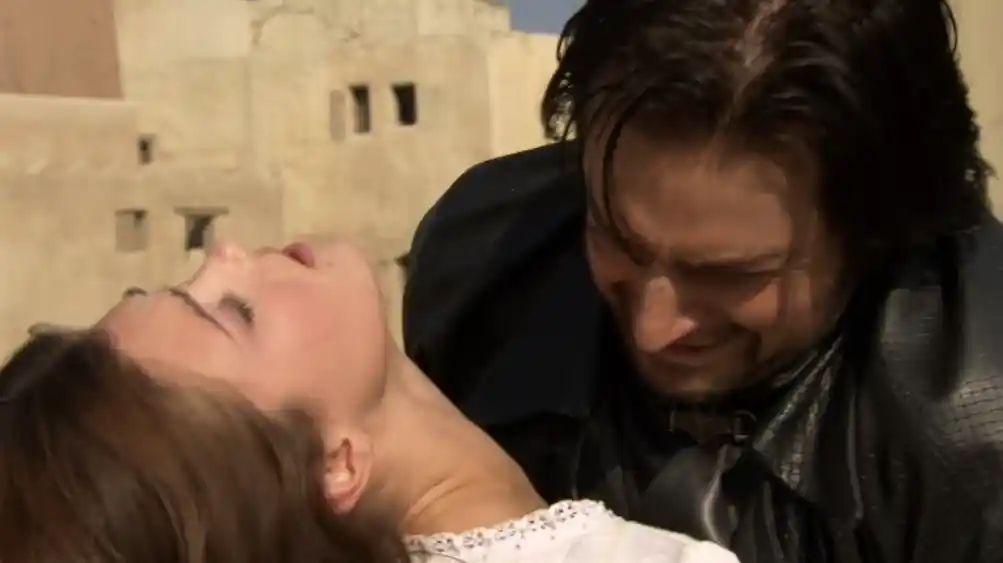
[Gisborne runs his sword through Marian, delivering a blow that will prove fatal shortly.]
-- "We are Robin Hood", written by Dominic Minghella
Gisborne's ultimate sin
The Aftermath
This was the moment that shocked fandom, and caused many fans to turn away from the show. Richard Armitage does an outstanding job of conveying a tortured soul within Gisborne, even as the character performs the most heinous acts. The show held the promise of - if not a true romance for Marian and Guy - at least the redemption of his character.
And yet, all al of Guy’s good deeds had been solely focused on his feelings for Marian. There was little broader change in his character apart from her.
At the time, I thought of Marian’s taunts to Gisborne as suicidal — an example of “suicide by cop”. But of course, that’s unfair. It is an example of the agency that Marian has had throughout the show. She knew the risks in taunting Gisborne, but it was a desperate gamble to keep him distracted long enough for the others to arrive.
And after Gisborne kills Marian, he has lost the heart to carry on.
But the show does continue. Marian and Robin finish saying their vows. The dying Marian tells Robin to “make an honest woman of me.” Djaq and Will chosoe to stay behind.
The king does not return to England just yet. He once again sends Robin in his name, saying “You are King Richard.” And then the king repeats the season’s catchphrase and the episode’s title “We are Robin Hood.”
After Marian’s death, the words seem to ring hollow.
The second series surpasses the first. The shifting loyalties of Allan, Gisborne and Marian are captivating. Other Robin Hood productions have had traitors in the band, but not the sustained narrative we see with this season. In a way, the story is unbalanced. Viewers are more invested in what’s happening with the characters in Nottingham than Sherwood Forest. And even for those more interested in witty camp than dark nights of the soul, Keith Allen’s playfully wicked sheriff is more fun than the Sherwood Forest crew.
For many fans, the show ended with this season. Three major characters depart. The head writer departs. The most compelling relationships of the series are now in the past. And the fact that King Richard does not return with the outlaws makes his kingship seem weak.
But it is a reality of television that at least some semblance of a status quo needed to be maintained. The ratings were high enough to justify a third season.
Robin Hood: The Complete Series: The North American release of all three seasons - on DVD only.
Order Robin Hood: The Complete Series on Amazon.com
As an Amazon Associate I earn from qualifying purchases from the links (at no additional cost to you).
NEXT:
PREVIOUS:
Contact Us