Created by Dominic Minghella and Foz Allan
Starring Jonas Armstrong, Lucy Griffiths, Richard Armitage and Keith Allen
(Tiger Aspect for BBC One)
Airdates: October 7, 2006 - December 30, 2006
The original version of this review was published to coincide with the release of the show's second season and responds to both the first series episodes but also the publicity surrounding the show's return.
I'd like to apologize for the excessive negativity. With 19 years worth of hindsight, it's not a review I am particularly proud of.
I have added a 20th anniversary reappraisal of Robin Hood at the bottom of this page.
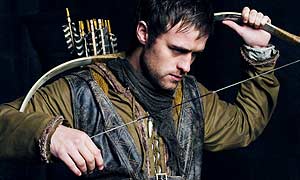
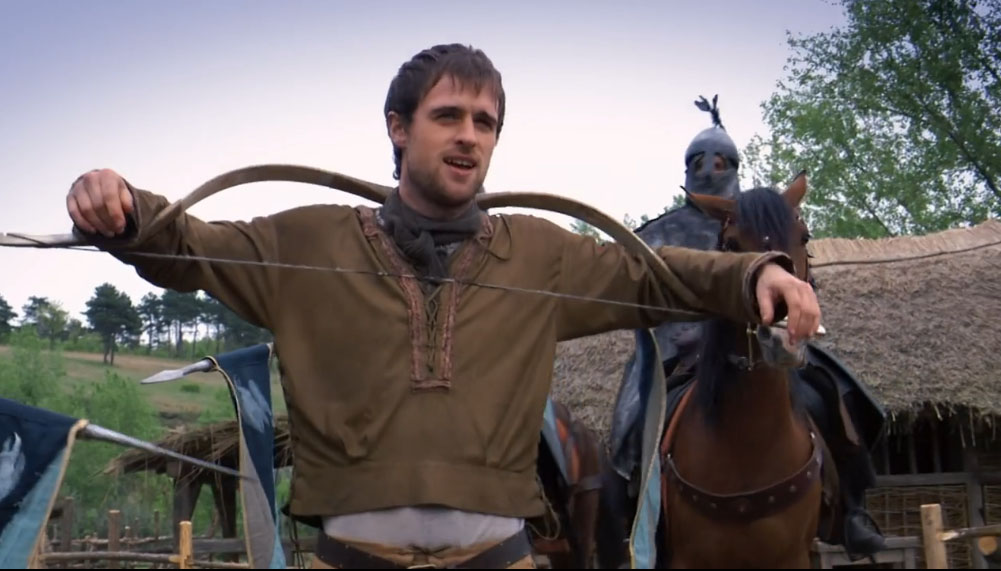
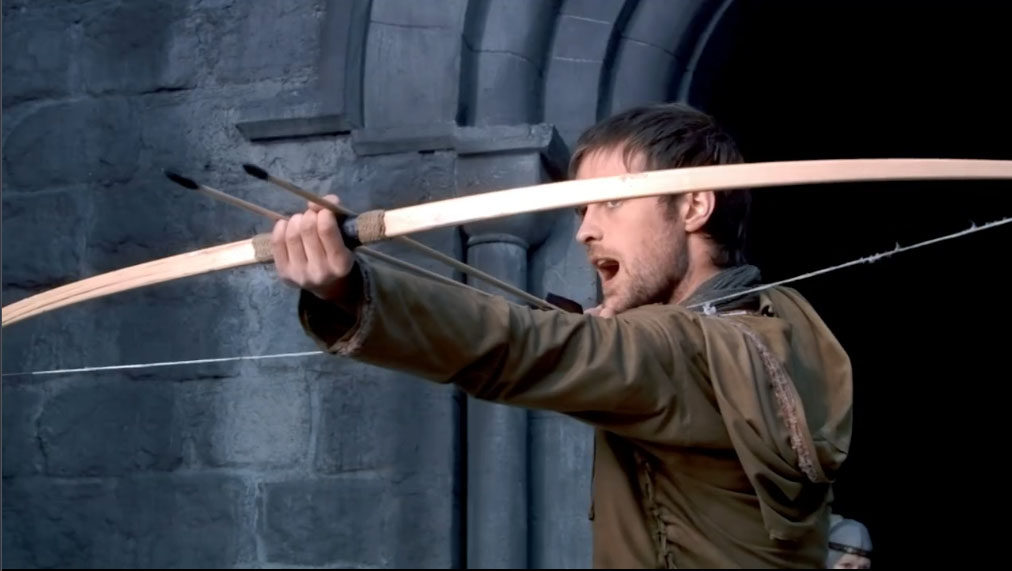
In the BBC Press Pack for Series 2, lead writer Dominic Minghella says there's something "timelessly appealing" about "a noble who champions the poor". Before being outlawed, Jonas Armstrong's Robin of Locksley was the earl of Huntingdon. Not that you'd know it by his cheeky grin and hoodie attire.
One inspiration mentioned in interviews when the first series premiered is TV chef Jamie Oliver, as another lord acting like one of the lads. It's a bit odd to make Robin so highborn -- remember, the historical Earl of Huntingdon had a prominent role at King Richard's coronation -- but then to play him as an everyday bloke. Robin as yeoman or a knight would have been more blokish. Perhaps, the earldom was used because it is less threatening to the social order to have a noble helping the poor than to have the poor rise up on their own and claim their rights.
While he does have a pleasant cheeky grin and twinkle in his eye, Armstrong's Robin comes off as the youth you might meet at the video arcade. Perhaps this is an attempt at audience identification, but it feels wrongheaded when Robin has experienced so much on the Crusades to come off so... average and unconcerned. In the press release for series 2, Jonas Armstrong says "Last time, Robin was carefree. It was almost like he was slapping his thigh and saying, 'come on, lads, danger doesn't worry me.'" And producer Foz Allan remarks "He was a boy last year, but this year he is very much a man." That "boy" last year had already fought at Acre, seen bloody massacres and suffered a near mortal wound. Making him so "average joe" in the first series didn't make Robin relatable -- it made him a bit of a joke.
Although he's become such a kid-friendly character, there are some pitfalls in the Robin Hood legend when crafting family friendly programming. Until the final episode of the first series, Armstrong's Robin did not kill.
It's a noble sentiment for today, although it feels out of place in a 12th century adventure series. Telling your enemies that you won't kill anyone is near-suicidal. The press releases for the 2nd season note repeatedly that Robin is now more buff, more macho, and "if Robin has to kill someone in order to prevent a catastrophe, then with respect that's what he will do."
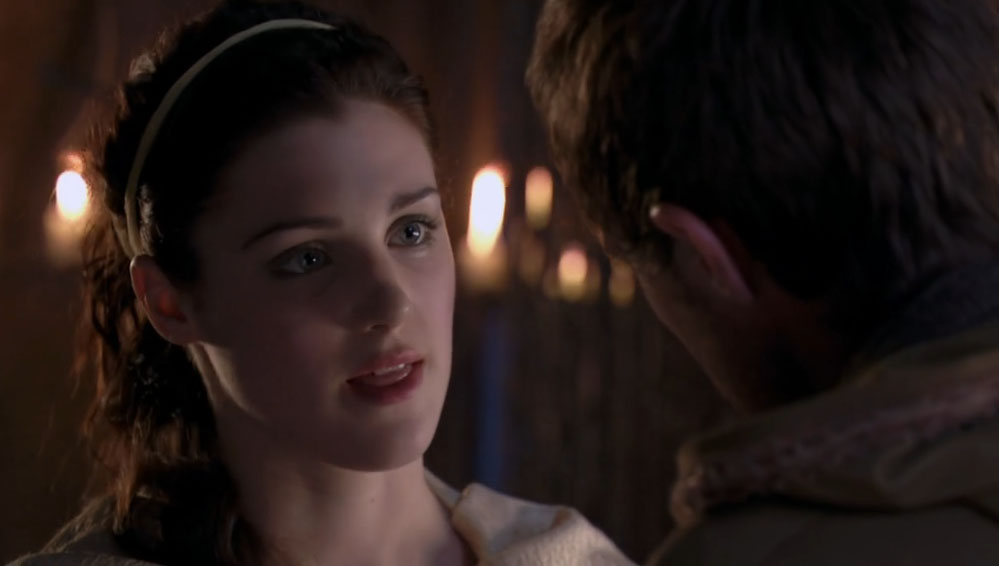
Marian and Robin Hood
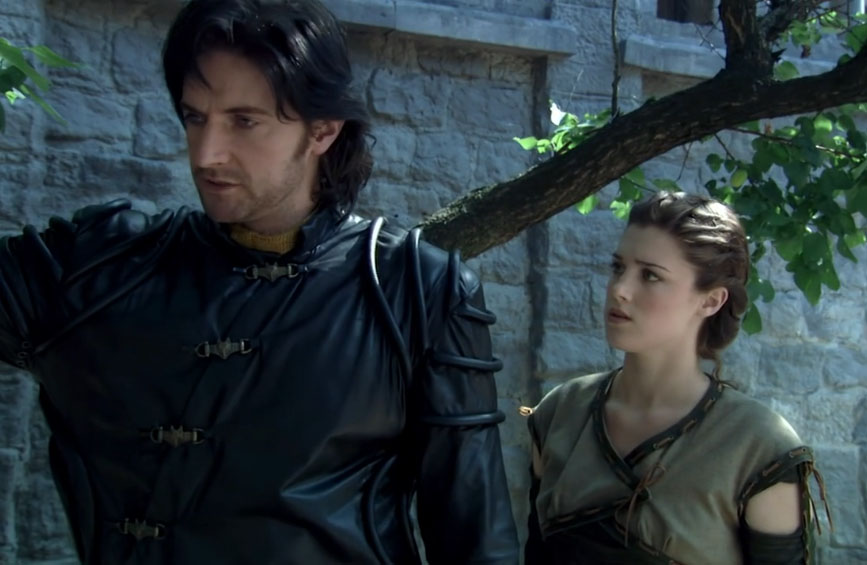
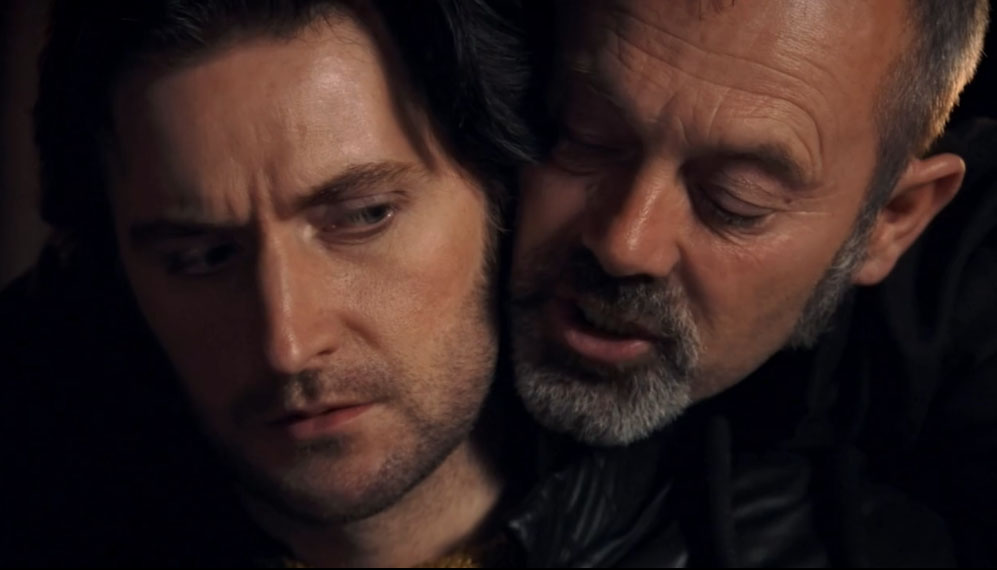
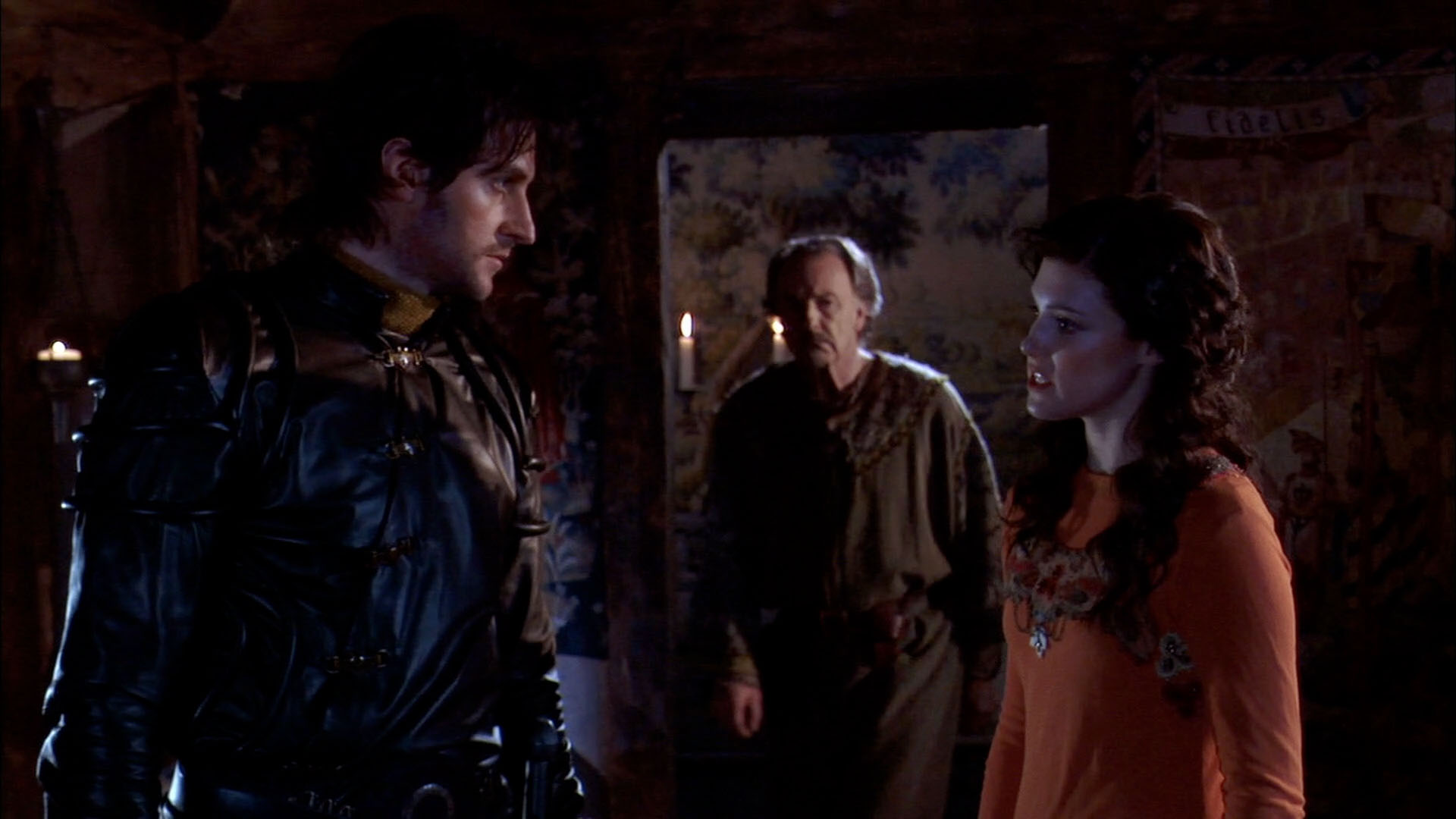
Guy of Gisborne and Marian
In the first series, the one thing that makes Armstrong's Robin come alive is the love triangle between Robin, Marian and Guy. The tension in the 8th episode (with the jokey title "Tattoo? What Tattoo?" in the UK and the blander title "The Assassin" on its original BBC America airing) is considerably higher than average. That struggle pushes Robin's buttons and makes the character feel more vital and alive. These are qualities that need to be seen more often. When told to resign himself to Guy and Marian's wedding in the final episode, Robin says "Do you know something? I am sick of doing the right thing."
Hopefully in the second series, Robin will do the wrong thing a bit more often. There's no reason that the hero -- especially an outlaw hero like Robin -- has to be bland. He needs the passion and drive that the love triangle provides.
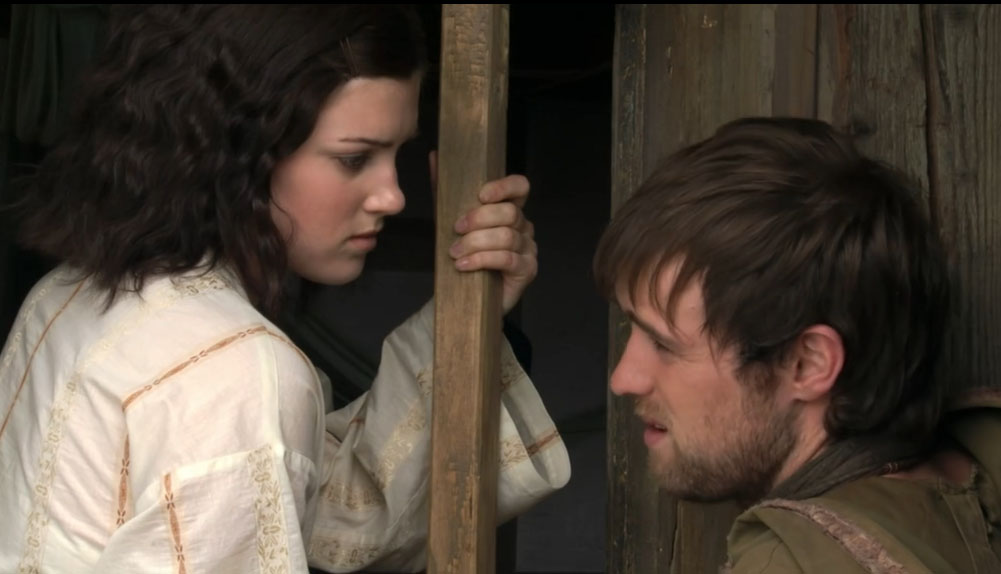
Marian criticizes Robin for leaving on the Crusades
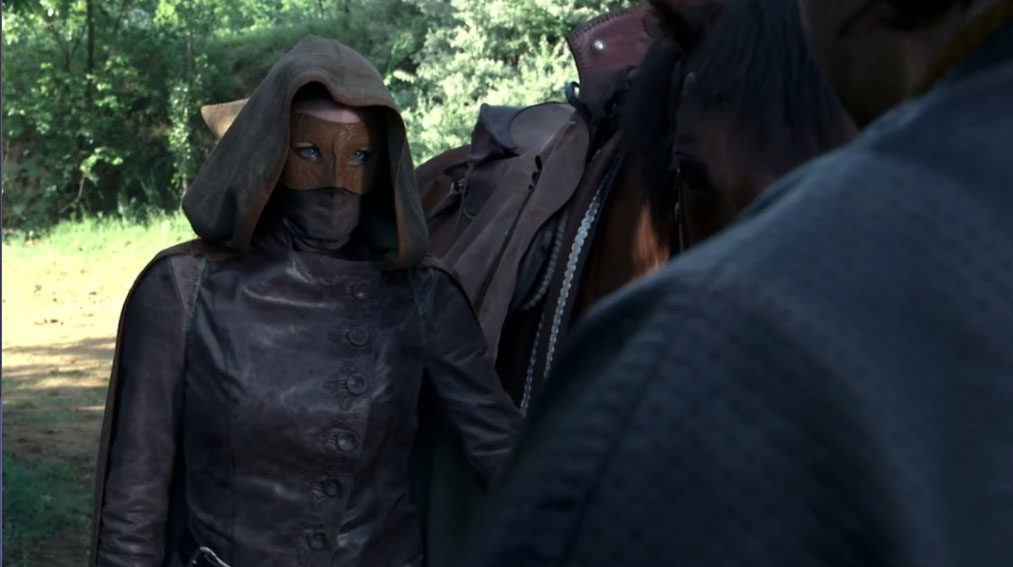
Marian in her Nightwatchman disguise confronts Gisborne
Lucy Griffiths plays a Marian that is often labelled as "feisty". To show her as being different from some damsels-in-distress Marians of the past, this Marian actively talks back to Robin. Sometimes as in the second episode when she icily calls Robin a "fool" upon his capture, it can seem more cruel than independent. However, this is a standard trope of the love story. As the supposedly dying Marian confesses in the penultimate episode of the first season, "We have never once spoken the truth to each other. For instance, I call you a fool when I mean you are a hero."
Marian does back up her sharp tongue with more heroics than Mary Elizabeth Masterantonio's Marian in Prince of Thieves demonstrates. Marian's cross-dressing secret identity as the Nightwatchman (or Night Watchman, sources vary) may be a nod to her page boy disguise in the original ballad. As the Nightwatchman was righting wrongs before Robin returned to England, the plot makes Marian less dependent on Robin, much like Theresa Tomlinson's young adult novel The Forestwife where Marian is part of a rival band. The execution is not as good as the ideas behind the cowl, as the Nightwatchman comes off a bit too superhero like for either the 12th century or the modern-day. (Also, given the feminine costume, it's odd that either Guy or the Sheriff would be misled about her gender.)
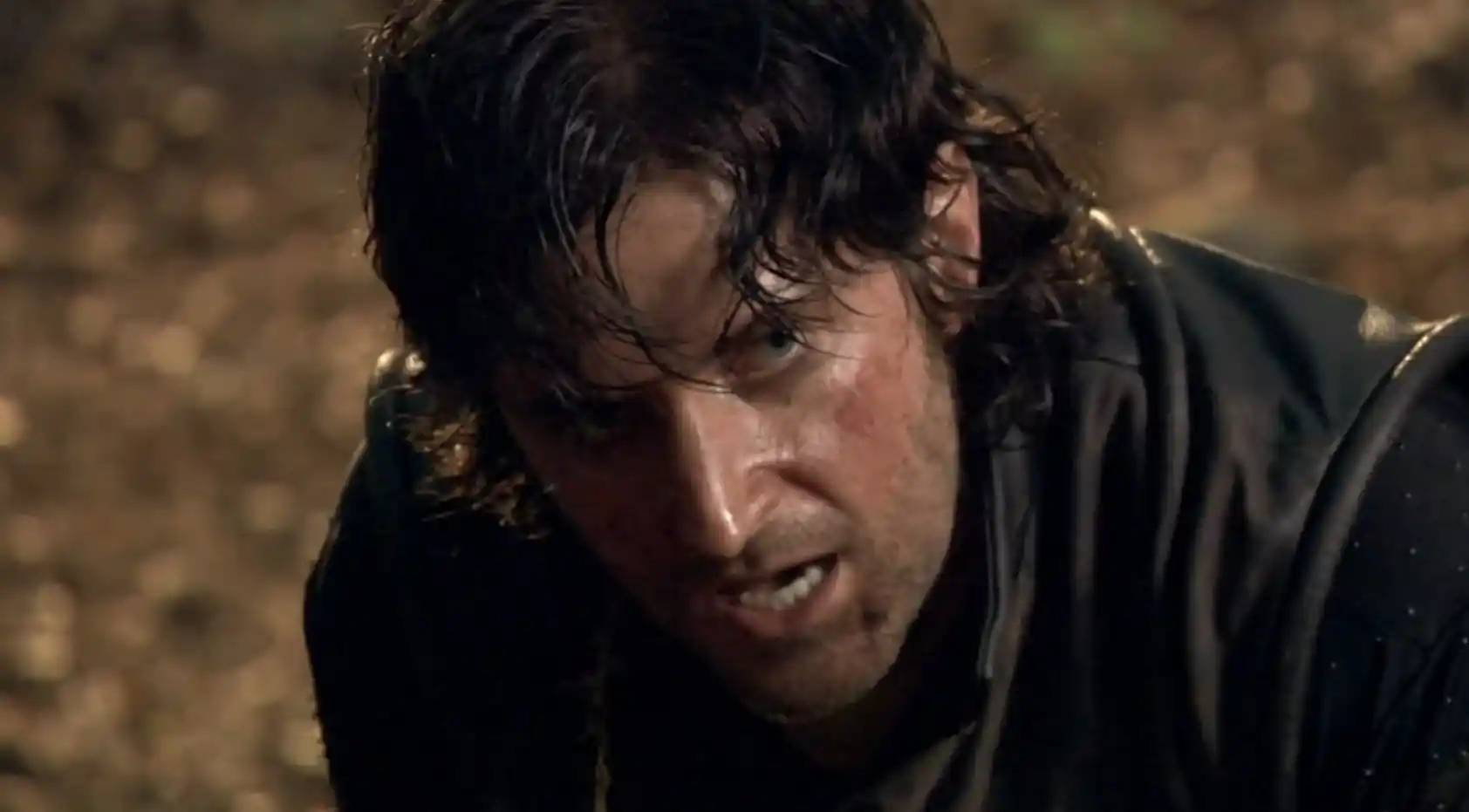
By far the most interesting character in the TV show is Richard Armitage's Sir Guy of Gisborne. Somewhat resembling Sean Bean, Armitage is always watchable whether his Guy is a camp supervillain or the more brooding, possibly redeemable lone soul that can legitimately "stir" Marian. Guy's public misdeeds -- such as leaving his child to die -- make Marian's defence of him seem a bit weak at times, however. But there is vitality to his character, and it is the Sir Guy subplot that makes Robin and Marian the most interesting.
Keith Allen's Sheriff seems like a lesser version of Alan Rickman's sheriff. He plays the role in that sort of panto villain way. And like a panto villain, the sheriff is allowed to be broad, to be the most transgressively modern in dialogue.
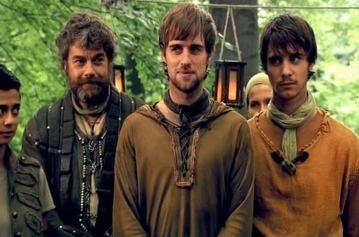
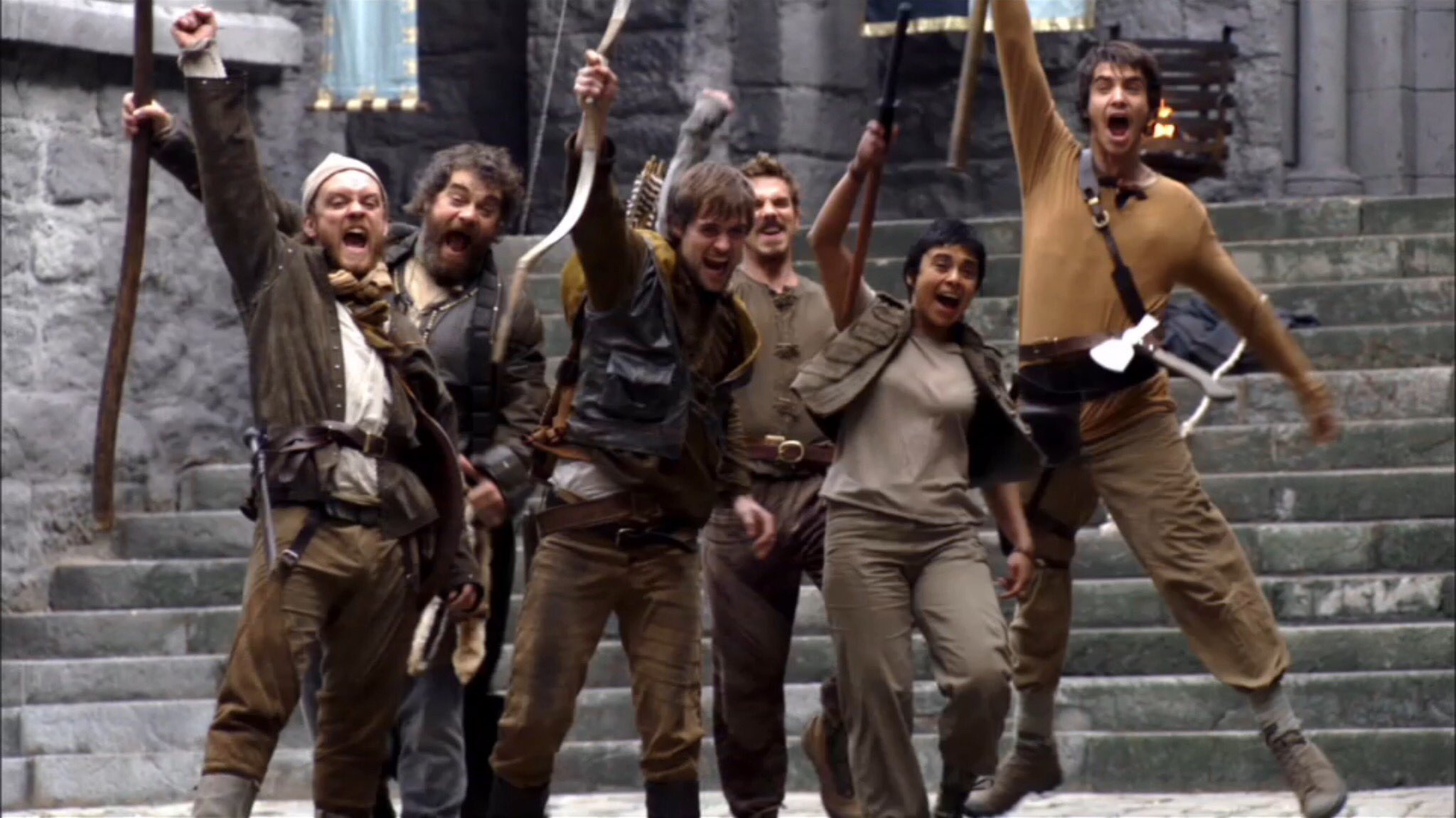
Unfortunately, the Merry Men do feel a bit "And the rest...", most having the same generic "boy band" look that Robin does. After 13 episodes, Harry Lloyd's Will Scarlet is ill-defined and underused. Joe Armstrong's portrayal of Allan a Dale as a con man is a fun updating on the old minstrel idea - a fast-talker instead of a musician. But for most of the series, until the final episodes, Allan becomes fairly non-descript. William Beck's Roy brought some tension to the band (and Beck's face had some character to it), and so it's a pity that he was killed off.
Gordon Kennedy's Little John is the most visually distinctive of the outlaw band (even more so than Djaq) in that he's older and bulkier than the rest. However, although Little John is a prominent character in the original ballads and the original outlaw leader in this TV series, he does not seem central to the action. This Little John seems most notable for his catchphrase speech patterns such as "Him. I like." His most dynamic relationship isn't with his fellow outlaws, but with the family he left behind.
The most developed and most interesting of the outlaws is Sam Troughton's Much. The character appears to owe more than a little to Samwise Gamgee of The Lord of the Rings and Wat from A Knight's Tale. Troughton does a credible job with the stock comic relief elements of Much's personality, and with his wartime experiences the character has more depth than the other Merry Men.
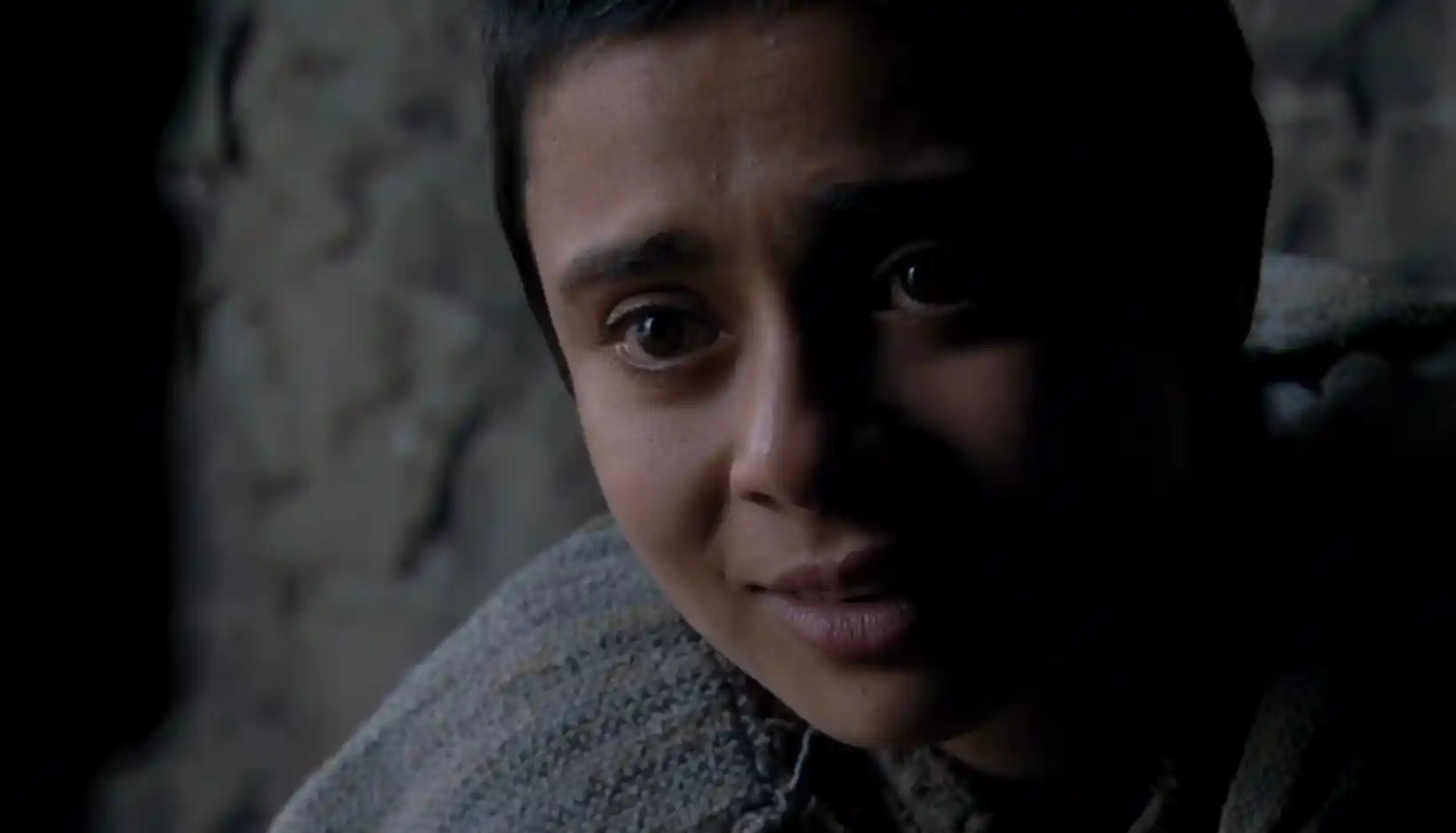
Anjali Jay plays Djaq, the latest in the trend of Muslim outlaws that started with Nasir in Robin of Sherwood. Djaq (pronounced Jack) seems closest to Morgan Freeman's Azeem in that she's something of a scientist and healer, although she's feistier than the calm Prince of Thieves character. Making the Muslim character a woman (albeit one who somewhat conceals her gender) allows another female character to join the heroes -- a good idea.
But while the Tiger Aspect/BBC series has yet another Muslim character, it so far lacks a familiar Christian character -- Friar Tuck. Some interviews (like The Times on September 8, 2006) claim the character was dropped to avoid making fat jokes and alienating overweight viewers. Denying overweight characters any presence on the show is hardly a praiseworthy alternative. It also suggests there's only approach -- cheap comic relief -- that can be taken with Tuck, which is not the case. A more revealing comment is made in a Sunday Times interview on Sept. 24, 2006: "We've got Robin coming back from fighting in the Holy Land. If you put in a Christian priest, you've got to start having conversations I don't think we were ready for at 7pm on a Saturday night."
It's common with kid-friendly versions of Robin Hood to downplay the role of religion in medieval society. Until Marian's wedding in the season finale, the most prominent religious officials were impostors posing as a bishop (in the first episode) and an abbess (in the sixth). Although there is some discussion of religion with Djaq, the England of the show is bizarrely secular when a Holy War informs much of the show's politics.
The Third Crusade is used as a perhaps too-thinly veiled allegory for the war in Iraq. "War on Terror" politics shape other elements of the series, such as when Guy explains to Marian, "the Sheriff has made special provision. Outlaws are to be classed as enemies of war. Thus we can hold them without trial .. and we can execute them without trial." So, outlaws have now been declared outside the law? What did the term "outlaw" mean before these special provisions? Addressing modern day politics using Robin Hood is nothing new (see the Crusades article for a discussion of its role in Robin Hood legend) although it can be heavy-handed here.
Confusing matters is the way Robin articulates his typical tax-fighting status. When he tells the council of nobles "Stop all taxes today! .. Get them trading again", Robin's approach suggests Reagan/Thatcher/Mulroney-era supply-side economics.
The tone of the new television series can be wildly inconsistent. For example, the costumes represent different ideals. Primary costumes like Robin's hoodie, Marian's cardigans and Guy's duster are slightly medievalized versions of modern clothing and fit with the modern ideal that the show seems to want. Other characters wear more authentic-seeming medieval garb while others dress in that generic revealing fantasy garb from Xena and Hercules. The same problem exists in dialogue where characters will speak formally with no contractions, but then use modern slang. The show feels disjointed at points.
The ratings for the series have been generally good, if not as good as originally hoped. The series performed well on BBC America. (The ratings fell off drastically in the third season though.)
Viewers are not bored with the outlaw legend yet, but in both ratings and writing quality, the new series is not as good as it could be.
One tidbit from my interview for Jonathan Ross's World of Robin Hood, the documentary that launched the 2006 TV series. I was asked about the influence of the 1938 movie The Adventures of Robin Hood starring Errol Flynn and to provide examples of its influence. I talked about how the structure of that movie had been borrowed many times since. The specific example I gave was how Robin was introduced by rescuing a poacher. The interviewer looked sheepish and said "I believe this show opens that way too." "Ah," I replied with a cheeky grin. "So, you won't be using that bit." (They didn't -- not that there was anything wrong in the 2006 show following a tradition and tweaking it.)
The most interesting thing in revisiting the first episode “Will You Tolerate This?” 20 years after it first aired is to see how the politics of the episode are reflected in the events of today. It was quite obvious in its parallels to the politics of 2005 and 2006 — much closer to the start than the end of “the War on Terror”. And while specific phrases are tied to events of decades past, the episode still resonates with the political climate of 2026.
Marian’s father, Edward of Knighton, urges Robin to play the long game and not to openly rebel against the insane and cruel sheriff. Both Edward and Marian are willing to see Will and Luke Scarlett, Allan a Dale and Benedict Giddens hanged for minor crimes in order to protect Robin’s position at court and the hope of subtly being able to shift the opinion of the council. Robin chooses to give up his privileges in order to save human lives. This choice feels especially potent today, as many have played the “long game” while cruel power has gone largely unchecked.
Fans of the 1950s TV series The Adventures of Robin Hood have remarked how the show helped form their moral values. You could do with a far worse artistic legacy if some members of what the 2006 showrunners called “the Playstation Generation” have grown up to ask the question “Will you tolerate this injustice?” And came to the same answer as Robin. “I, for one, will not.”
A notable moment in watching series one again was the episode "Brothers in Arms" where Djaq consoles Allan after the death of his brother. She speaks of her own brother -- the one truly named Djaq -- and how she "became him." "He still lives here, inside of me. As your brother lives inside of you."
But they aren't alone in this bonding moment. Will Scarlett is watching. Love triangles are a potent part of the show.
I noted in my original review that the series came alive in the eighth episode, and the conflict between Robin and Guy over Marian.
GISBORNE: You thought you'd come back from the Holy Land, covered in glory, didn't you? Well, guess what. No one here cares They couldn't even point at the Holy Land on a map. So what was it all for, eh? Robin of Locksley, Earl of Huntingdon, hero of Acre. And look at you now. You're just a common outlaw. House and lands lost. Do you think I don't laugh every time I go to sleep in your bed? And Marian, the woman you gave up. Lost. To me. You think I won't laugh every time To be honest, I was surprised you decided to stay in Nottingham. I mean, surely you would have friends elsewhere that would take you in. I should have realized. Marian. I thought you'd given up long ago. But you still carry a torch for her, don't you? And now she is to be mine.
ROBIN: I wouldn't hold my breath if I were you.
GISBORNE: She has accepted me.
ROBIN: When the King returns.
GISBORNE: A detail.
ROBIN: She will know you are a traitor. I will tell her.
GISBORNE: I'll deny it.
ROBIN: She is astute.
GISBORNE: True. And she has her doubts about me. But she is also stirred by me. She will believe my denial.
-- "Tattoo? What Tattoo?", written by Julian Mitchell [Uncredited]
Guy of Gisborne
Robin Hood: Common Outlaw
It is unusual that the writer of the most powerful episode doesn't have a screen credit. The tension between Robin and Guy plays as strongly now as it did back then. The episode highly both the romantic conflict,. but also the broader political dimension.
Two decades ago, I was bothered that the tropes of children's television were bringing down weightier material. Perhaps that was an error. Maybe I should have noticed how a witty, children's adventure show was elevated by these stronger elements.
Of course, I wrote my original review back when the second series had already been filmed and was ready to air. But I was glad to discover that many of the elements I liked the most about the first series had been picked up and expanded for the second series.
While Marian also advised Robin to play the long game, she acted in secret. And while the presentation leans toward the modern superhero, the idea that Marian was helping people independently -- years before Robin Hood -- is a good one. It means she believes in a cause, not just a cute archer in a hoodie.
I started my original 2007 review by remarking on the absurdity of Robin's no-kill policy. But reflecting on it, it does make an interesting arc, and quite an unusual one for a kid's show. Robin goes to the Crusades willing to kill. He sees how power is misused and abused in the Crusades and abandons killing altogether. But effectively carry on his fight, he does need to embrace some of his darker impulses. It resembles some of the tropes around western gunslingers who are tainted by their violent lives. Looking at it that way, the first season's storyline transcends any press release touting Robin's newly-rediscovered machismo.
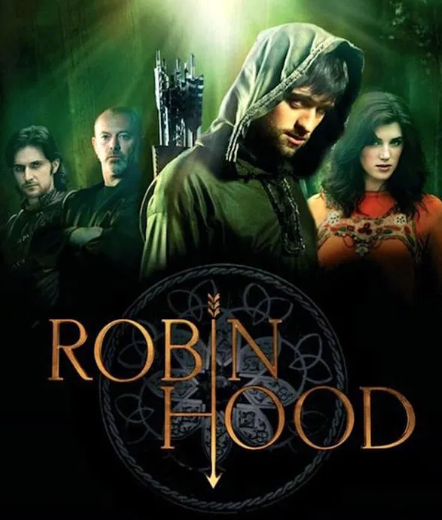
Robin Hood (2006) Season One: The North American release of the first series/season on DVD/BluRay including special features. Sadly the Jonathan Ross TV special is not among the features.
Order Robin Hood Season One on Amazon.com
Robin Hood Season One: DVD release. This does not include the BluRay discs.
Order the Season One DVD on Amazon.com
Robin Hood: The Complete Series: The North American release of all three seasons - on DVD only.
Order Robin Hood: The Complete Series on Amazon.com
As an Amazon Associate I earn from qualifying purchases from the links (at no additional cost to you).
NEXT:
Contact Us