Robin Hood Spotlight

Robin Hood
2006-2009 TV Series
Series Three

Spotlight Review by Allen W. Wright
(20th Anniversary: October 2026)

Robin Hood Series One DVD art

Introduction

Created by Dominic Minghella and Foz Allan
Starring Jonas Armstrong, Richard Armitage, David Harewood, Joanne Froggatt and Lara Pulver
(Tiger Aspect for BBC One)

Airdates: March 28, 2009 - June 27, 2009

This article is written in 2026 - a look at the 20th anniversary of the Robin Hood TV series billed as "Robin Hood for the Playstation Generation".

Unfortunately, it did not have the critical or commercial success of the show's second season.

All Change

The third series felt like a whole new show. Lucy Griffiths's Marian had been killed in the previous series finale. Will Scarlet and Djaq stayed behind in the Holy Land. The events of the last season had scarred both Robin and Gisborne.

But apparently, on the way back from the Holy Land, everyone stopped to pick out a new wardrobe. Gone were the modern-medieval icons of Robin's hoodie and Guy's black leather duster. Instead everyone was wearing costumes that were better intended to evoke the medieval period, although the choices might have landed closer to Renaissance Faire than genuine history. Those costume changes did not make the show feel more realistic and robbed it of some of its charm.

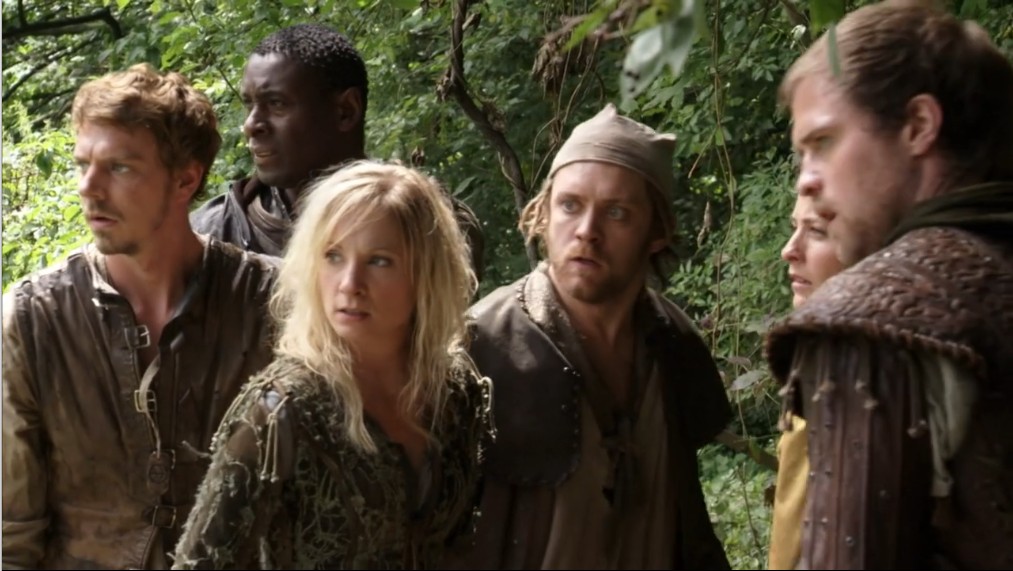
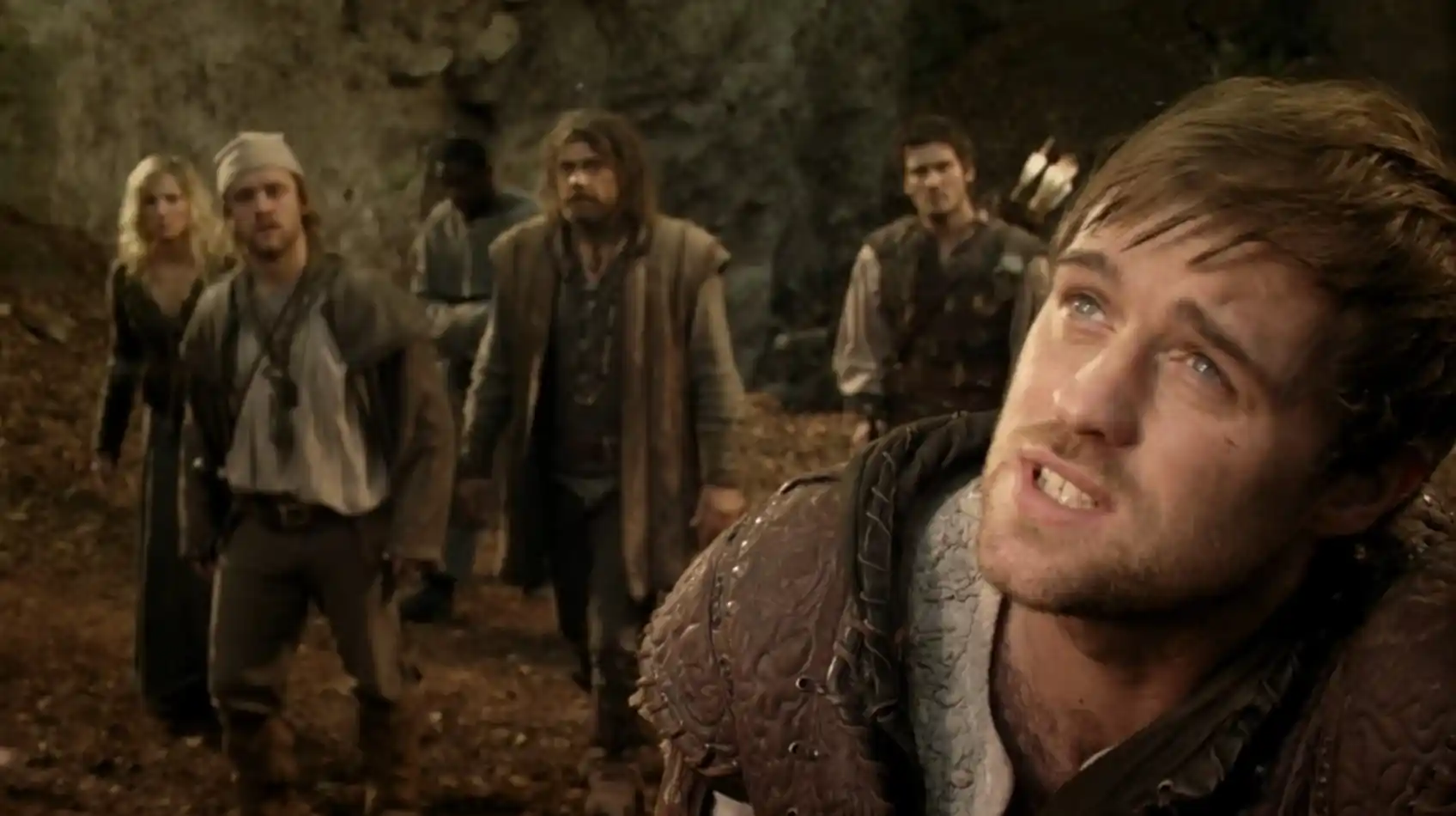
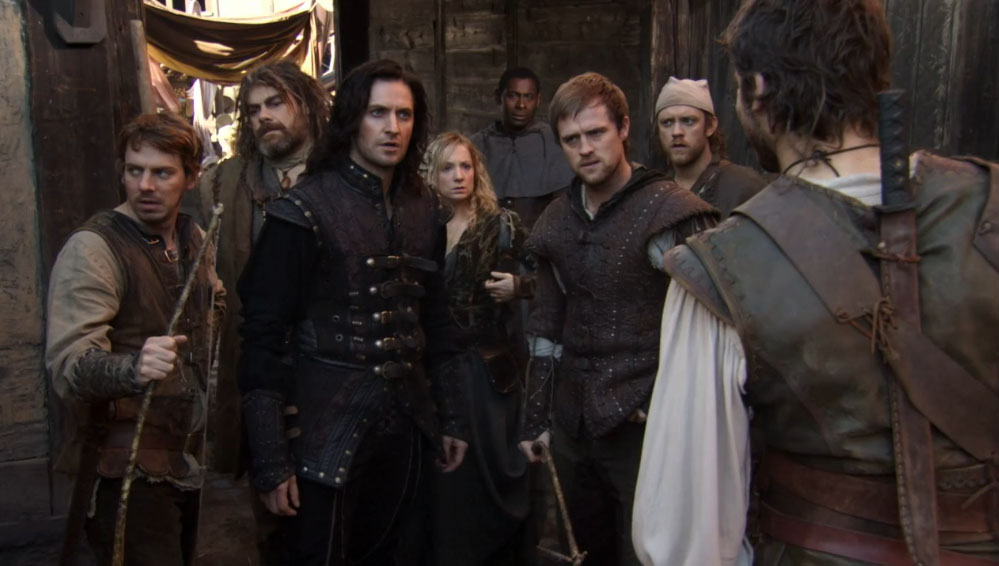
Gisborne with the Series Three outlaws

A Tuck in Time

The show lost three regulars at the end of last season. That means the outlaws needed some new recruits.

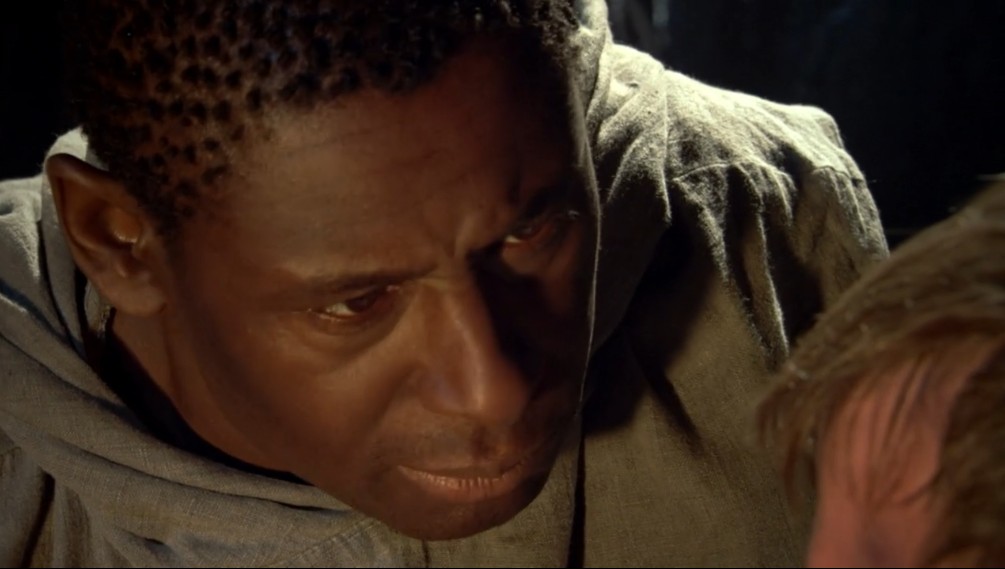
The most interesting of the new additions is David Harewood as Brother Tuck. The friar has finally come to the forest. Back in the first season, in some interviews the producers suggested there was no place for an overweight figure of fun in their forest. Harewood's Tuck is not a jolly friar with a wine sack and a mutton joint at the ready.  Instead this Tuck is a capable fighter, a true believer in Robin Hood's cause. In fact, he inspires Robin Hood to believe again. 

Tuck tries to inspire Robin Hood

TUCK: You know, years ago, when I left this country, the people of this nation were proud, strong, full of spirit. Now I come back to find their backs broken, their hope shattered. Everywhere I go I see fear and suspicion haunting their faces. And yet everywhere I hear one name. Even from the mouths of children. One name, whispered in hope. One name that keeps the flame of England burning. Robin Hood.

ROBIN: Well, maybe that name's already dead. Because I'm done with it.

-- "Total Eclipse", written by Michael Chaplin

Tuck seems to believe the ends justify the means. He manipulates everyone to ensure Robin's faith in himself and the people's faith in Robin Hood is restored. This Tuck is the brains of the outfit -- so skilled at times there is the danger of falling into certain tropes.

And while it is nice that as a Black man, Harewood ensures that the outlaw band retains an element of diversity after Djaq's departure, it's Harewood's presence and skill as an actor that is most welcome.

Kate of Locksley flanked by Allan and Much, with Robin and Isabella in frame

Kate flanked by Allan and Much

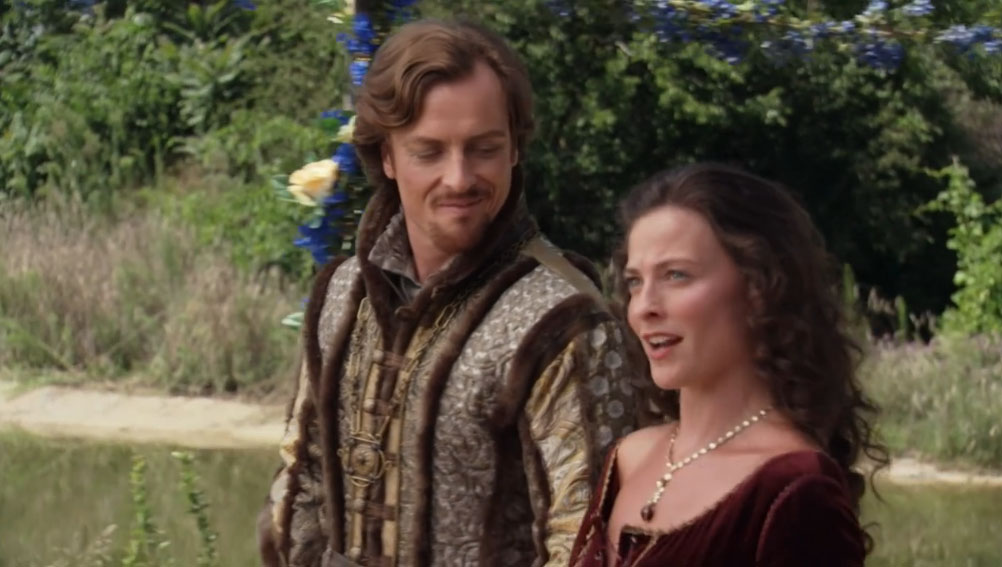
King John with Isabella

Isabella with Prince John

Overlapping Love Triangles

Joanne Froggatt joins the cast as Kate of Locksley in the season's second episode. Originally, she's an outspoken villager ready to berate the sheriff or Robin Hood as needed. She attracts the interest of both Much and Allan. At first, she seems destined to largely fill the "feisty woman" void left by Marian and Djaq. Kate doesn't join the outlaw band until the end of the fourth episode. (Allan suggests the band doesn't need another woman because they have Much. A disturbing jibe that gets repeated, and not the best message to send to the show's younger audiences.) Audiences might think Kate would be intended to serve as a replacement for Marian as Robin's love interest but it takes a good while to get there.

Instead, the episode after Kate joins the band, we're introduced to a new female character -- Isabella played by Lara Pulver. It turns out she's the sister of Guy of Gisborne, but that doesn't stop Robin from soon kissing his enemy's sister.

In the early seasons, Marian had to live among the villainous factions at court. Marian as a spy at court has long been part of the film and television Robin Hood legend. But Isabella's relationship in the court of Prince John (Toby Stephens in a three-episode guest role) is very different from what we're used to. It's not certain where her true loyalties lie at first. Is she playing the bad guys, or is she looking out for herself?

Within a few episodes, Isabella is the new Sheriff of Nottingham and displaying a true sociopathic streak. Her relationship with Robin crumbles. And Kate is there to pick up the pieces. 

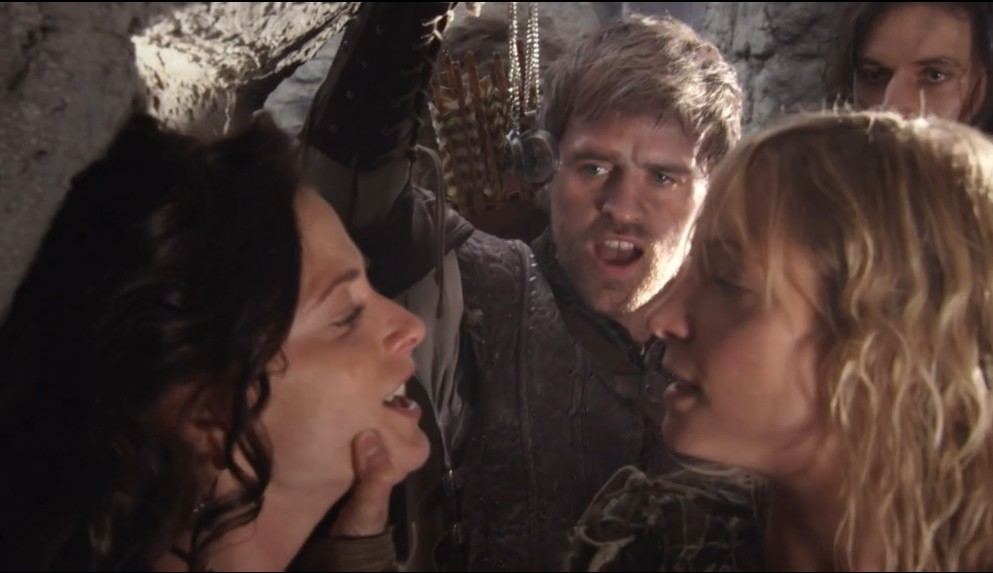
Kate and Isabella fight as Robin watches

Kate suddenly seems much more interested in Robin. And he shows some hesitation in reciprocating.  Kate thinks Robin's loyalty to Much might be the problem and she asks Much to tell Robin that Much doesn't like her that way. It's a convoluted path, but eventually Robin and Kate become a couple -- much to Little John's approval. 

For those keeping track, the triangles (real or implied) are 1) Much, Allan and Kate, 2) Robin, Isabella and various bad guys, 3) Robin, Isabella and Kate, 4) Robin, Much and Kate. And there might even be a few tiny triangles that involve Isabella, her siblings and Robin. When Shakespeare remarked "the course of true love never did run smooth", he had no idea what this show had in store. Mind you, fans had a hard time accepting Robin and any woman other than Marian as "true love". Holliday Grainger as guest character Meg in the episode "A Dangerous Deal" (by writer Michael Chaplin) reminds Gisborne of his affection for Marian, another temporary substitute for a fan favourite relationship of seasons past. (And it's yet another triangle as Meg is torn between siblings Guy and Isabella.)

In the show's penultimate episode, Kate and Isabella have a cat-fight straight out of Dynasty. Djaq and Marian were better served by their writers than this year's female characters were. But then all the characters are inconsistent.

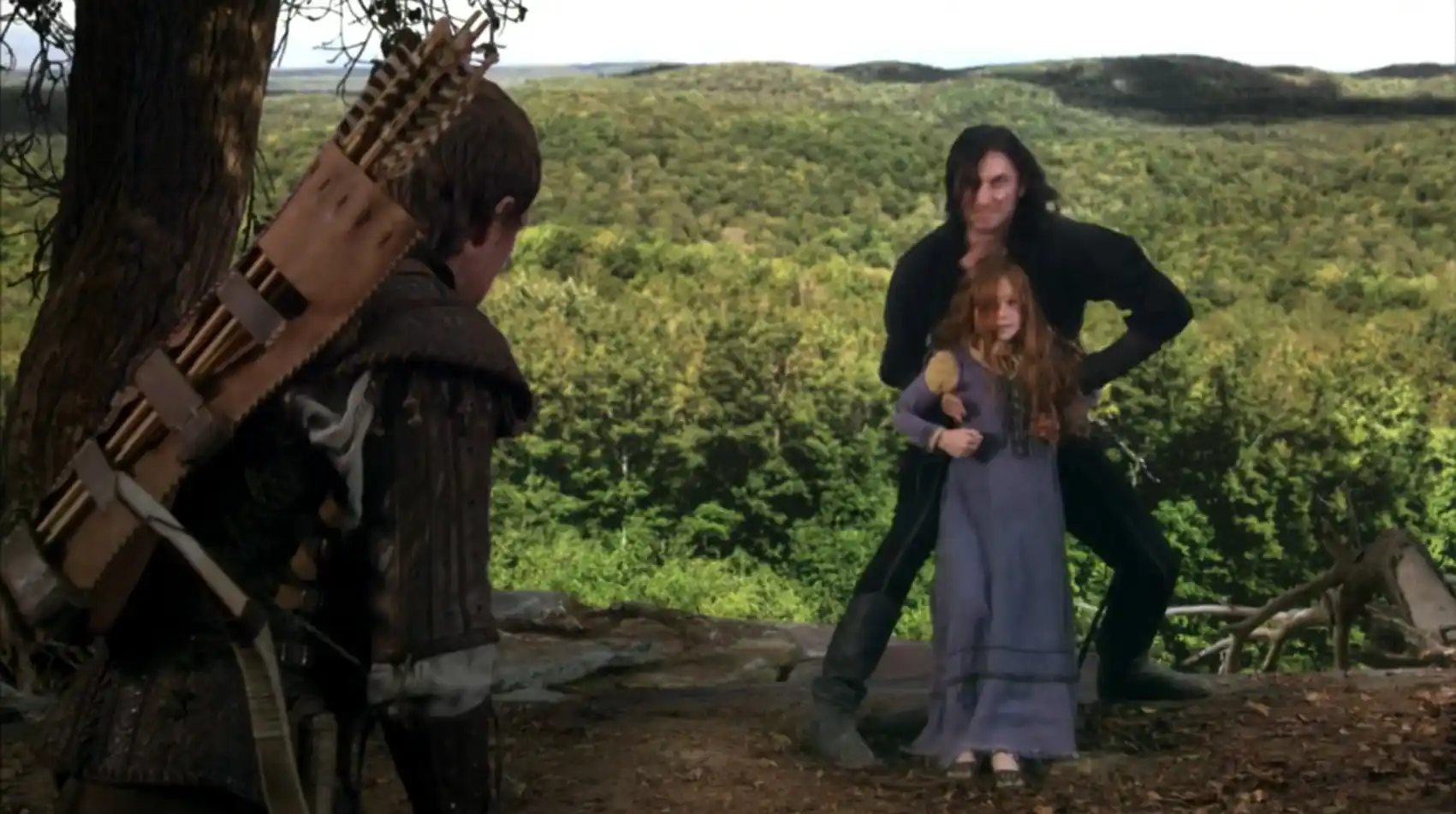
Gisborne threatens a child in Total Eclipse

Gisborne threatens to kill a child and then Robin Hood

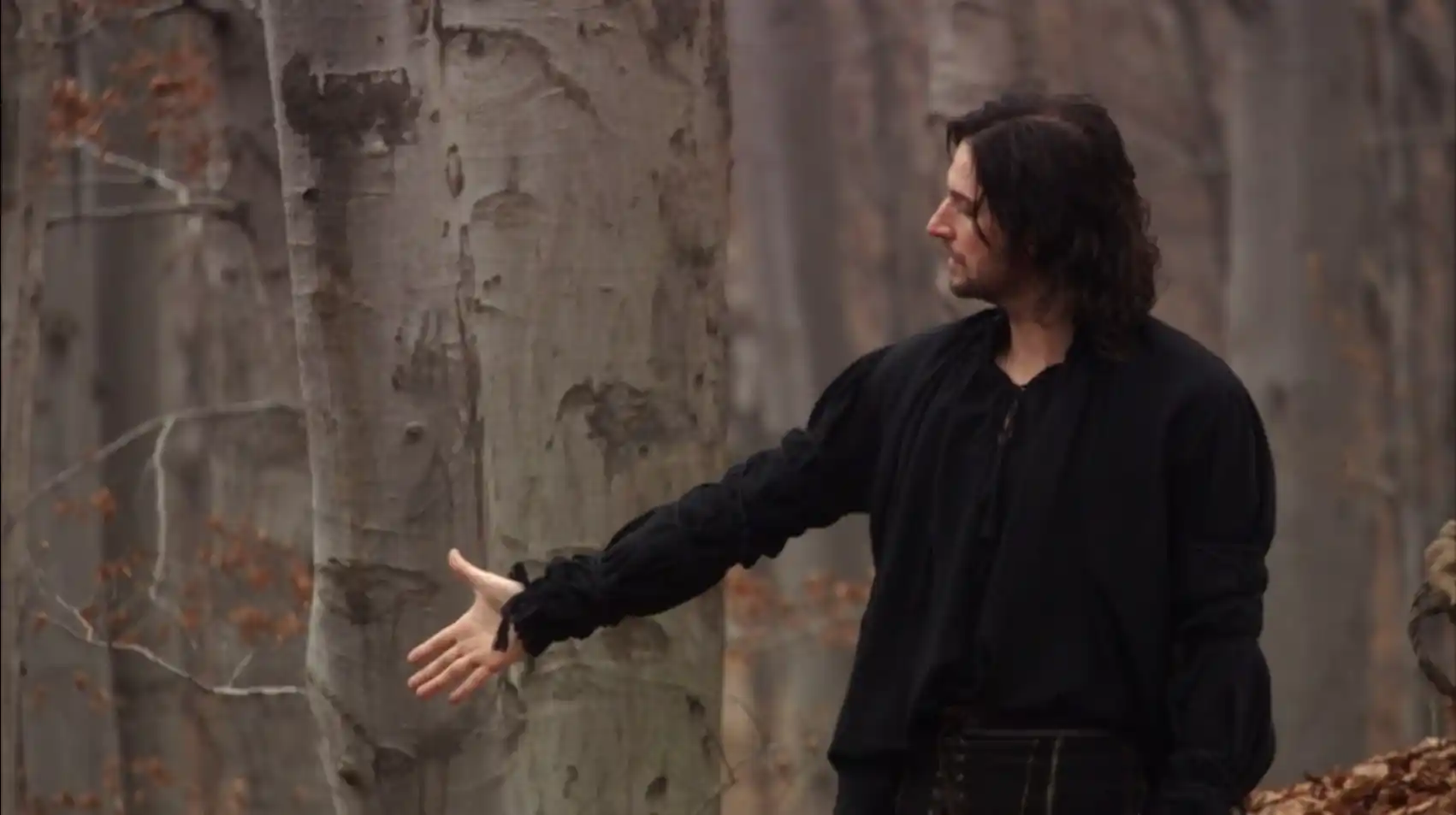
Guy extends the hand of friendship

Gisborne extends the hand of friendship

A Lack of Direction

It's not just the romantic subplots that are constantly shifting. Bad guys come and go. New characters are introduced and the direction shifts radically. The Sheriffs of Nottingham in the third season include Vaisey (Keith Allen - from the previous seasons), Gisborne, guest character Lord Sheridan (a former ally of Robin, played by Robert Pugh who would go on to play a baron in the 2010 Robin Hood film), Isabella, Isabella's husband Thornton (briefly and self-declared, played by Nicholas Gleaves in a single episode role), Isabella again, and one last twist in the finale.

Perhaps most notable is the story arc for Guy of Gisborne. He begins the season ready to murder a child if Robin Hood doesn't surrender. He later seems to murder the sheriff Vaisey. His loyalties towards his sister shift.

And then when Guy is cast outside society, Guy and Robin discover that Robin's father is alive. Dean Lennox Kelly plays Robin's father Malcolm in the episode "Bad Blood" by Lisa Holdsworth that contains extensive flashbacks to Robin and Guy's childhood -- a childhood that doesn't square with the continuity of the previous seasons. And the long-lost father tells Robin of his affair with Guy's mother. The two enemies share a half-brother named Archer. Suddenly Robin and Guy are willing to put aside their differences in order to find their shared half-brother with an absurd name.

But perhaps the radical shifts in direction begin to make sense when in August 2008 - several months before the third series is to air - news sites announced that Jonas Armstrong will be leaving Robin Hood.

The press reports have quotes from executive producer Foz Allan -- one of the show's co-creators, but not the name that generally appears in the writing credits. Co-creator Dominic Minghella left at the end of the second series. And it's not clear at all who took over the head writer's responsibilities.

We know more about the head writer / showrunner for a fourth season that never was than we do about the third season which did make it to air. In January 2009, Sally Wainwright gave an interview to say she had been invited to reinvent the show for a fourth series -- one without Jonas Armstrong or Richard Armitage as it would turn out.

The third series has a sense of the writers throwing things at the wall to see what sticks ... and not a lot did.
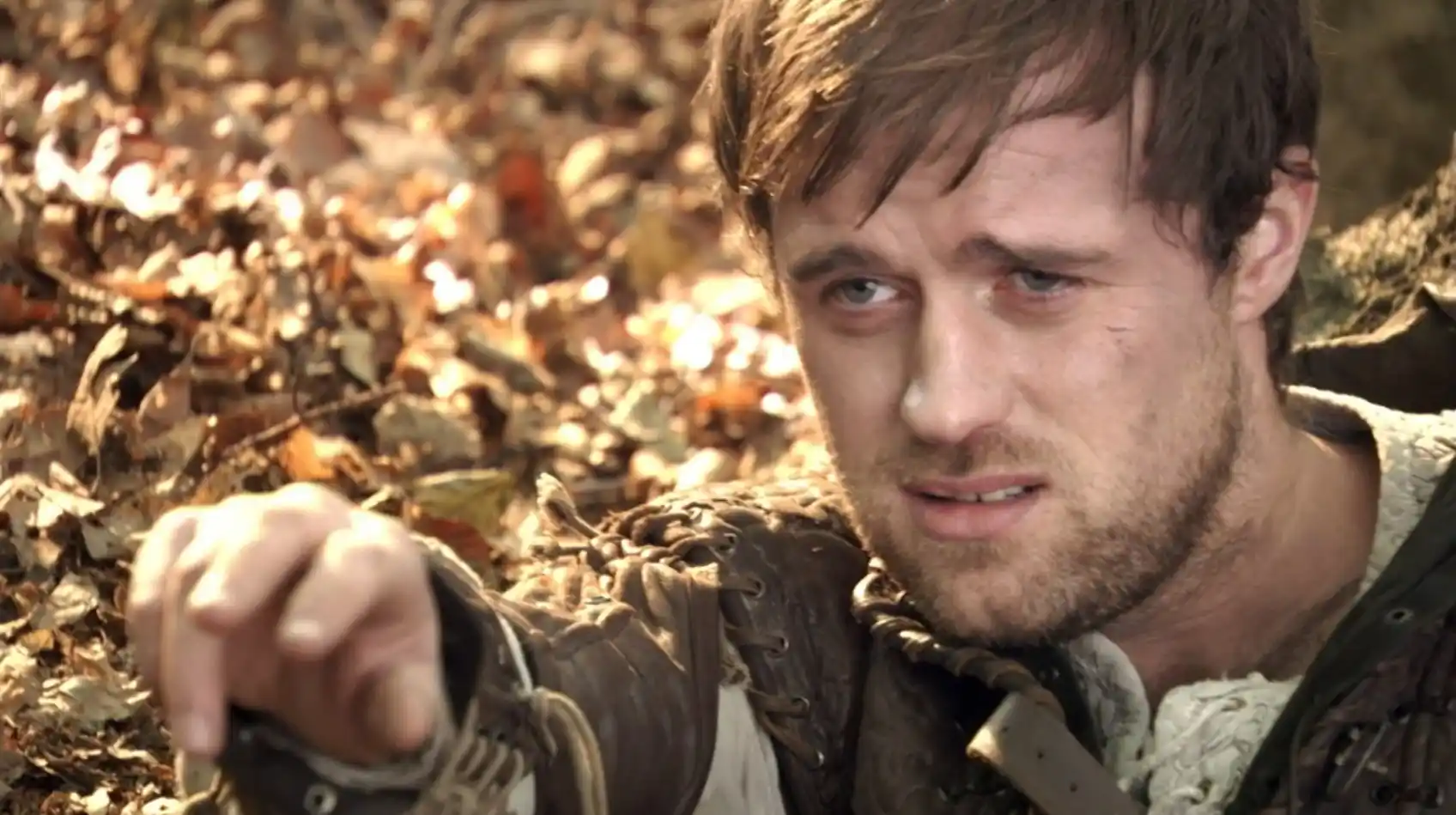
A dying Robin reaches toward an image of Marian

Out With a Bang ... and a Whimper: The Death of Robin Hood

The radical shifts in tone continue to the final episodes. Robin aligns himself with Gisborne ... which does not sit well with his band. Archer is found ... and he's more of a wastrel than a hero. (Archer is played by Clive Standen who would find greater success as Rollo in Vikings.) Archer travelled to the east and picked up a bunch of special weapons that could turn the tide in battle.

In the two-part finale "Something Worth Fighting For" (part one by Ryan Craig and part two by Simon J. Ashford), Sheriff Isabella pardons Allan -- making him look like a traitor once again. That story has little chance to develop before Allan is killed by a returning Sheriff Vaisey. Isabella also encourages Kate's mother to create dissent between Robin and Kate. 

The episode borrows an aspect of Robin of Sherwood's two-part finale "The Time of the Wolf" by Richard Carpenter -- which also sees villagers standing up to recover their stolen food. But the nature of the villagers' rebellion is different -- and perhaps better than the earlier TV show.

The most inspiring thing about the first part of the finale is Tuck's sit-down protest at the castle gates. The guards hesitate to advance, and Archer switches to Robin's side. The episode ends with the heroes fully in control of Nottingham Castle, but then Vaisey makes himself known -- presenting Allan's body as a warning.

The finale is filled with big moments and some near misses.

Several characters die.

King Richard never shows up. He was captured by Leopold of Austria and is being held for ransom. The king's ransom is a key moment in many 20th century versions of the legend such as the 1938 film starring Errol Flynn.  It's unusual to see the concept introduced so late, but it's a thread that could have been followed up in a fourth season.

The sheriff attacks the town with Byzantine fire -- sold to him by Archer before he reformed his ways. The heroes steal back some of the terrible weapon. Tuck uses his scientific knowledge to work out the formula. And he realizes the castle stores enough ingredients that they can destroy the castle and the sheriff's power base forever. The destruction of Nottingham Castle is a huge event but it rings mostly hollow.

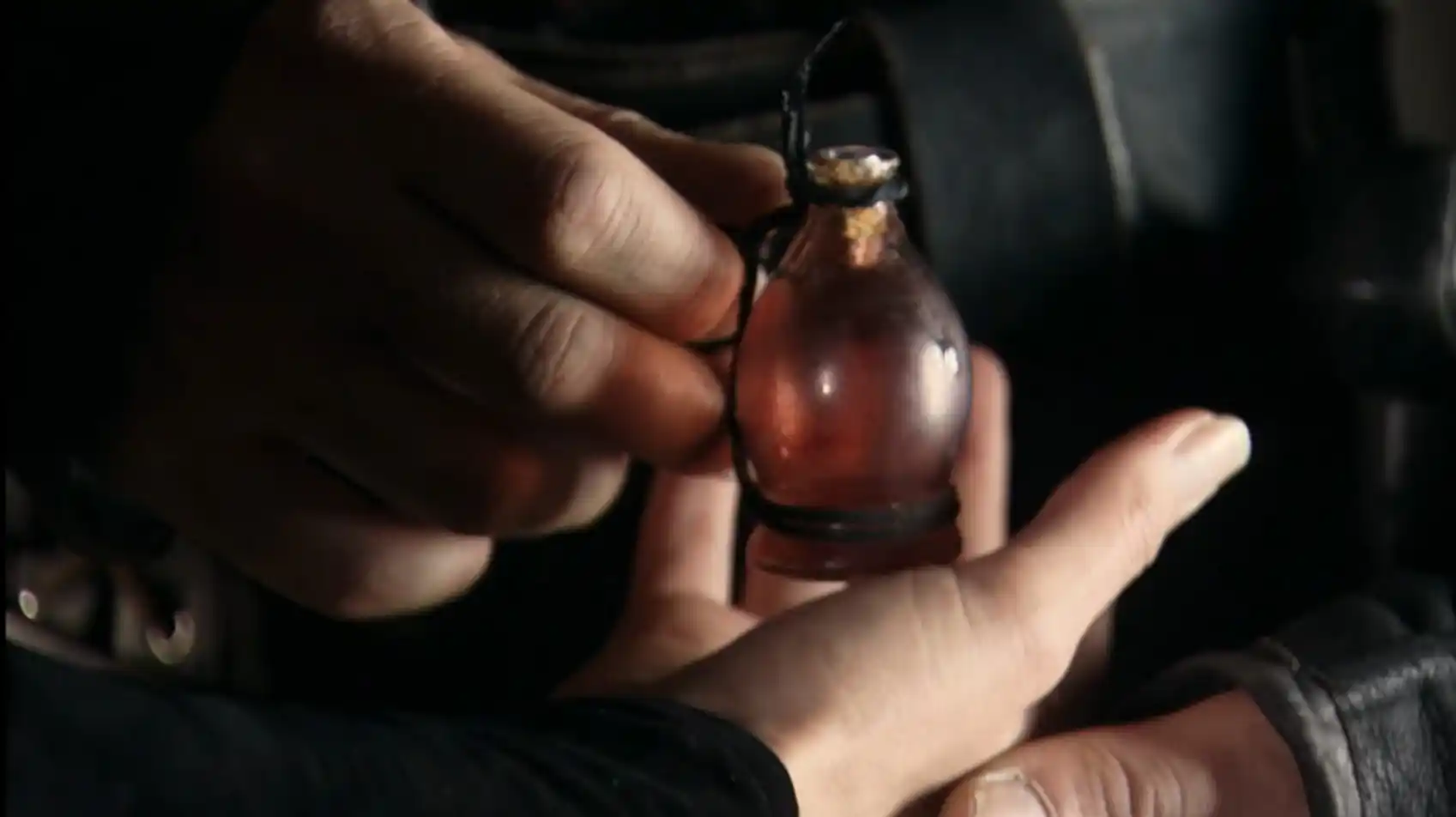
In a way, Gisborne provides the instrument to the death of Robin Hood. He visits the jailed Isabella and gives her a vial of poison -- a cruel kind of mercy. It is one of the strongest moments in the finale.

Guy gives Isabella a vial of poison

ISABELLA: You so want to kill me, don't you? What's stopping you, Guy? Not the fact that I'm a woman surely. You're so good at killing defenceless females.

GISBORNE: You're right. There is too much blood on my hands already. Isabella, you'll find no mercy amongst the outlaws now. So when the time is right, you might want to use this. (Hands her a vial.)

ISABELLA: Poison.

GISBORNE: A single drop will act slowly and painfully. For it to be quick, you must take it all.

ISABELLA: This is your idea of mercy. Your last brotherly gesture. For whose sake, Guy, mine or yours?

GISBORNE: I do this for our mother's sake. Although there's preciously little of her goodness left in either of us.

-- "Something Worth Fighting For, Part Two" written by Simon J. Ashford

Isabella, the Sheriff and Blamire

Isabella, Sheriff Vaisey and Blamire

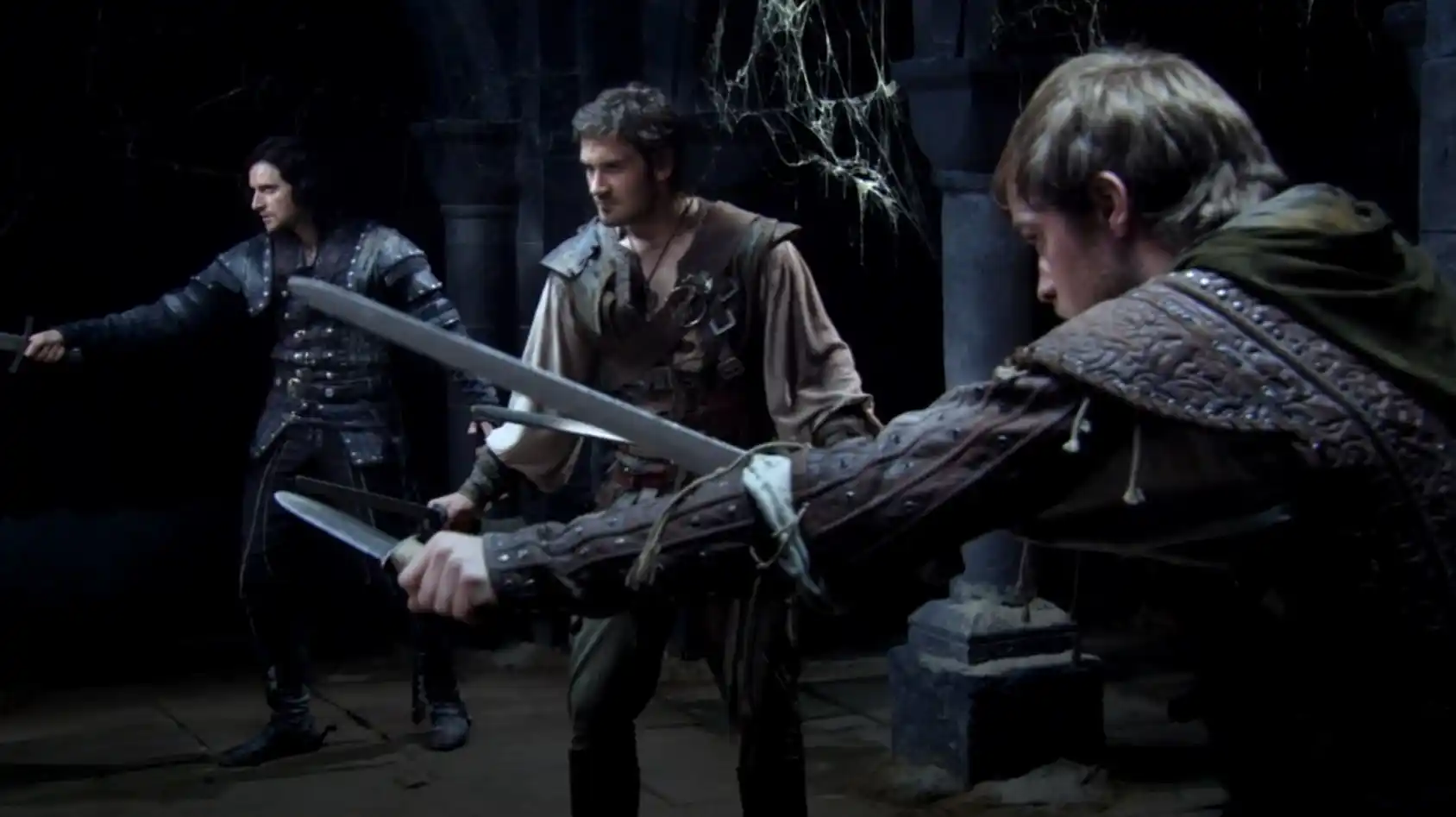
Robin, Archer and Gisborne

Robin, Archer and Gisborne

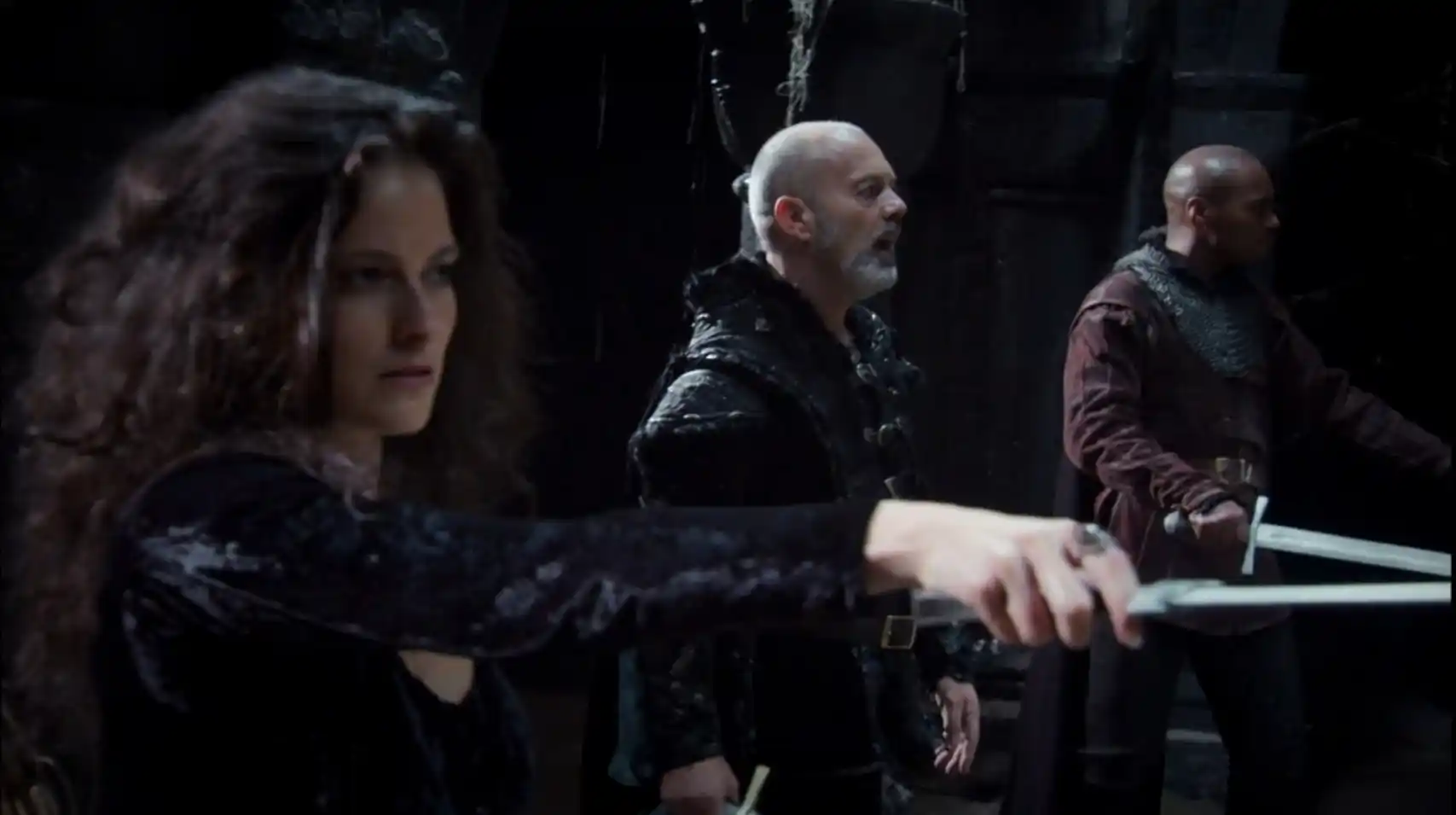
The strange family of Robin, Gisborne and Archer confront Sheriff Vaisey, Isabella and their underling Blamire (Fraser James) in the tunnels. Vaisey and Isabella mortally wound Guy of Gisborne. Robin himself seems to only incur a small scratch -- but Isabella had dipped her blade in Guy's poison. She imagines that Robin will be dead by sundown. And Guy confirms that if she used the poison that's likely true.

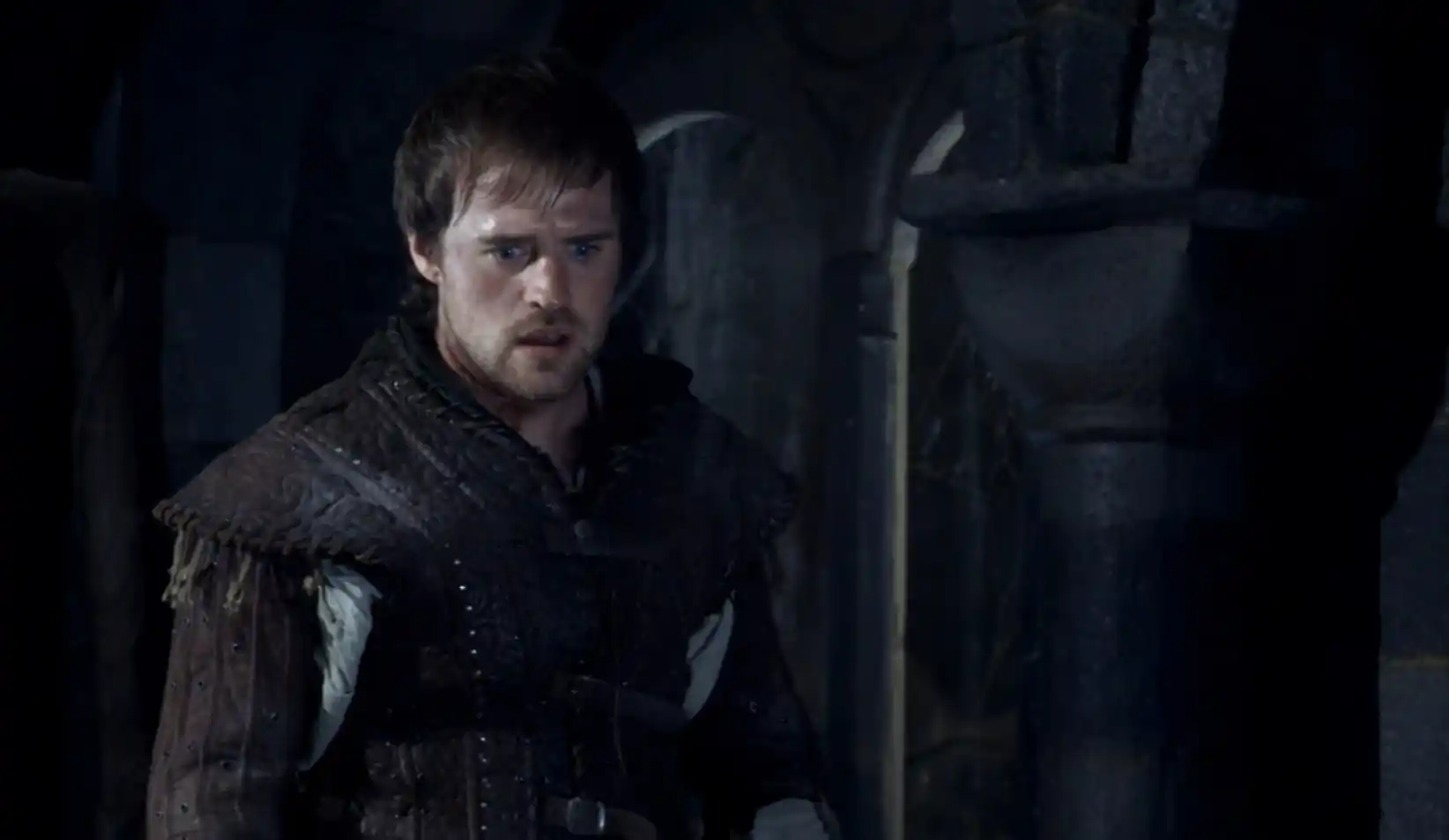
Robin Hood and Isabella's fatal scratch

Robin's impending death both departs and plays into the tradition. In the ballad Robin Hood's Death, Robin goes to his relative the prioress of Kirklees to be bled, a common healing technique. She purposely drains too much blood away. When this aspect of the legend was adapted in the 1975 TV series The Legend of Robin Hood and the 1976 film Robin and Marian, the medieval bleeding aspect was replaced with the less gruesome and perhaps easier to understand device of poison. There's no prioress in this series -- although we did meet an abbot of Kirklees in the earlier episode "Lost in Translation" -- but in the 1975 TV series, the prioress was Gisborne's sister. So having Isabella kill Robin does fall within the tradition.

Vaisey is overjoyed, but the villains need to be elsewhere. He asks Robin not to die until he gets back.

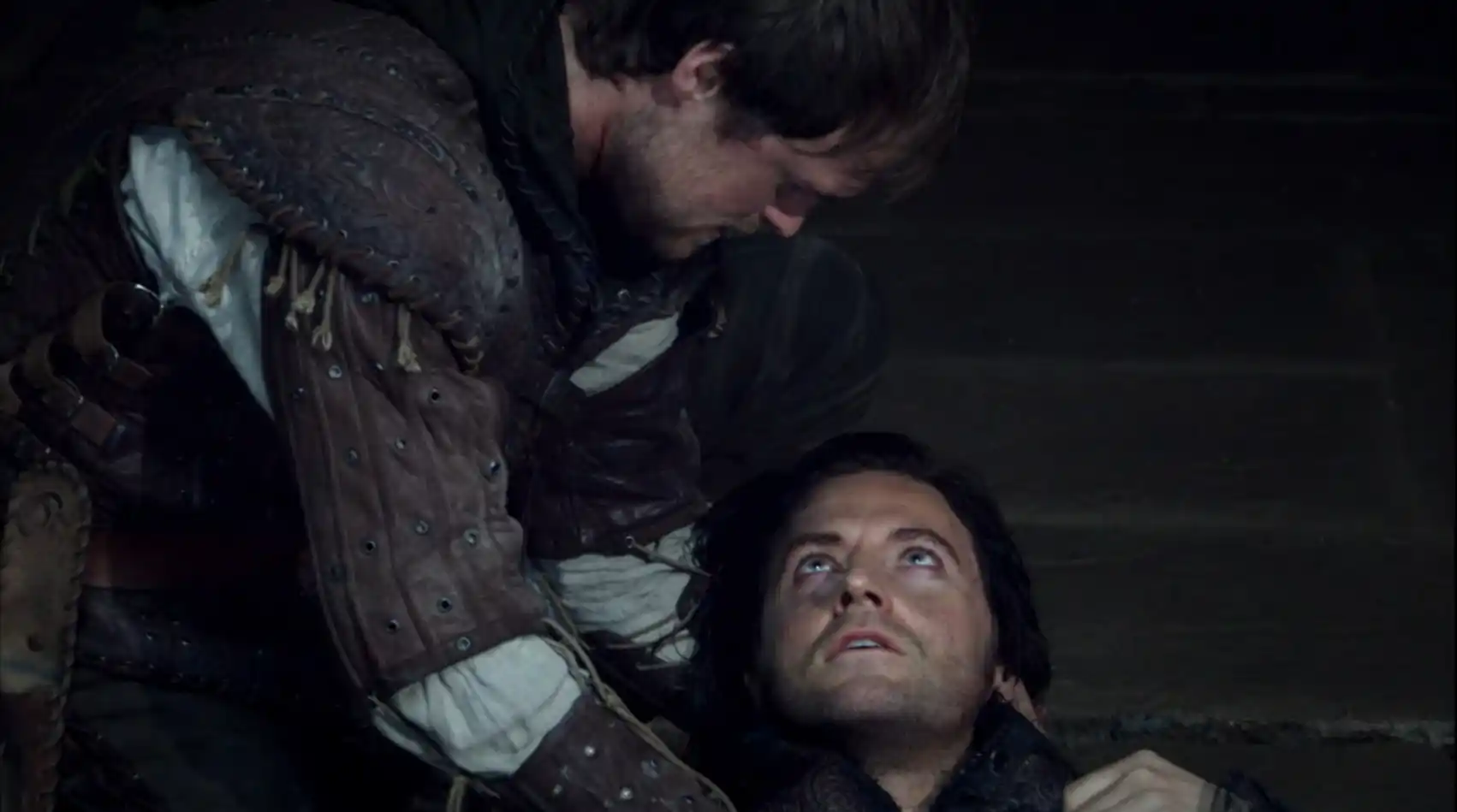
The three brothers share a moment together, but then Robin sends Archer away on a task. And the two one-time foes are left alone. Gisborne dies in Robin's arms.

Gisborne dies in Robin's arms

GISBORNE: Is this the end?

ROBIN: For you and me both, my friend.

GISBORNE: I'm sorry. At least you have someone waiting for you. Marian. The love of my life. She was always yours. I lived in shame. But because of you, I died proud... and free.

-- "Something Worth Fighting For, Part Two" written by Simon J. Ashford

Robin doesn't tell Much or Kate about his impending doom, although he does confide in Tuck. Once the castle is cleared, Robin shoots a flaming arrow to ignite the Byzantine fire. It seems an impossible shot, but as he triumphantly shoots his last arrow Robin declares "I am Robin Hood." A statement that flies against an oft-stated theme of the show, where Robin Hood is more than just one man.

As the heroes celebrate the destruction of the castle, Tuck tells them what happened. He says "it's time to say goodbye". They find Robin in Sherwood.

ROBIN: I'd forgotten how beautiful sunsets here can be. Sherwood. This is home.

MUCH: Is it true?

ROBIN: [Nods] The final battle.

-- "Something Worth Fighting For, Part Two" written by Simon J. Ashford

Robin admires his last sunset

Robin makes his farewells. He tells Much that he is Robin's best friend. He repeats Little John's classic battle catchphrase to back to him with conviction. "Today is a good day to die." He tells Archer that the rest of the band are also his brothers. And he tells Tuck to find a new leader and carry on without him. And he apologizes to "brave Kate" that he has to leave her -- to leave all of them. But he says he needs to do this alone, and walks away from them.

But Robin is not quite alone. He receives a final vision -- Marian.

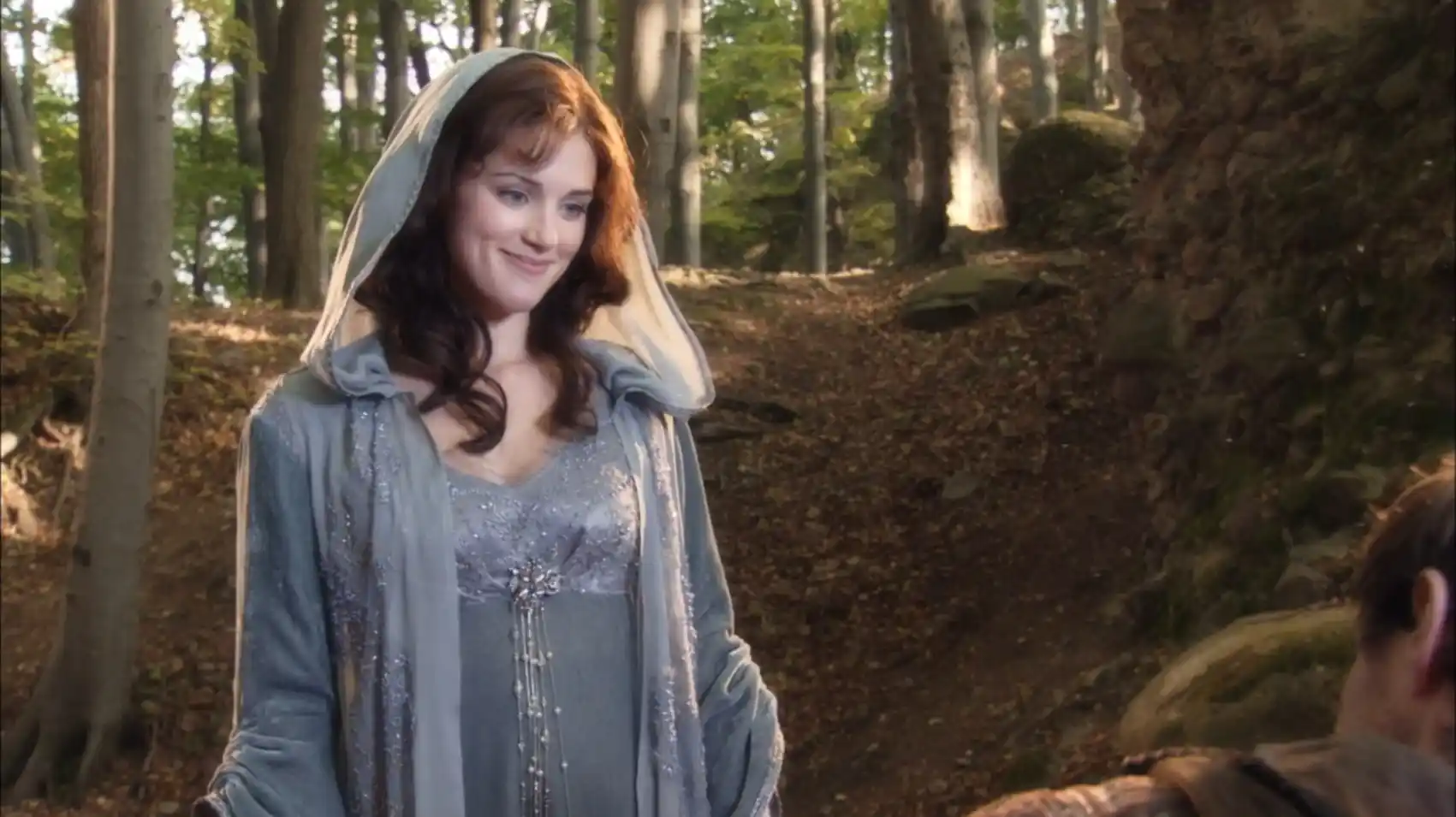
Marian visits the dying Robin

ROBIN: Marian.

MARIAN: I have waited for you.

ROBIN: I knew I would find you again.

MARIAN: It's time. The greatest adventure is yet to come.

ROBIN: My wife.

MARIAN: Now and forever, my love.

-- "Something Worth Fighting For, Part Two" written by Simon J. Ashford

The brightest spot in Robin's death is a returning cameo from Lucy Griffiths as a heavenly Marian. But then if the show was going to end with Robin and Marian going to the afterlife together ... why spend so much time pairing Robin with Kate?

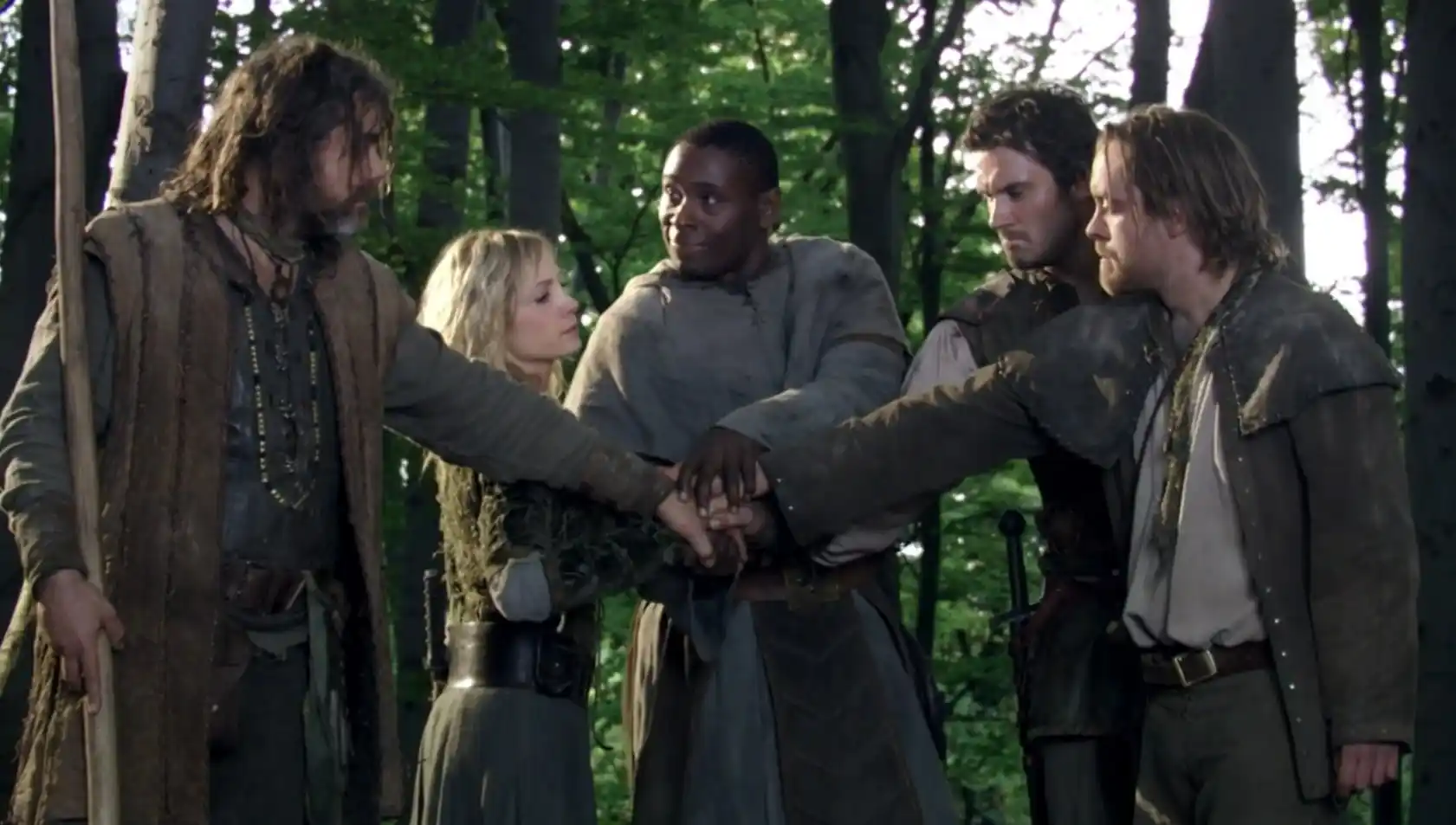
The survivors of the band pledge to carry on in Robin's name

The second series spent a lot of time with the phrase "We are Robin Hood" -- that Robin Hood was more than just one man but a spirit and a team. And we see a glimpse of that as the survivors including a reformed Archer pledge to carry on the good fight. Little John repeats the "We are Robin Hood" mantra.

One wonders if the fourth series would have carried on with Archer as the new Robin Hood. His absurd name would make some degree of sense in that case. And his family ties to both Robin and Gisborne would have served as a link to the past.

And yet, the most interesting reaction to watch in the final moments is that of Sam Troughton's Much. He was closer to Robin than the rest of the band. And Troughton is an underrated actor.

The show launched on BBC One in 2006 with a huge fanfare, including a full-length promotional documentary (Jonathan Ross's World of Robin Hood -- I turn up in it for a few seconds). It had eight million UK viewers some weeks. But the final episode only had 1,7 million viewers. The ratings had been on the decline, so much so that the BBC decided to move their big series finale from BBC1 to BBC2 in order to make room for Wimbledon on its prime channel.

It makes a sad end for a Robin Hood show which, if not one of my absolute favourites, had many great moments and a generation of fans.

Order Robin Hood on DVD / Bluray

Robin Hood: The Complete Series: The North American release of all three seasons - on DVD only.

Order Robin Hood: The Complete Series on Amazon.com

As an Amazon Associate I earn from qualifying purchases from the links (at no additional cost to you).

Where to go from here:

NEXT:

PREVIOUS:

  • MAIN PAGE - Just the index for the articles on the BBC / Tiger Aspect TV series
  • SERIES ONE REVIEW - The original article written in 2007 looking at the 2006 debut season. plus a 20th anniversary retrospective from 2026
  • SERIES TWO REVIEW - Reflections on the much-improved second season of the show. 
If you enjoyed this Spotlight, check out the following:

Contact Us

© Text and Location pictures, Copyright 2026 Allen W. Wright - All Rights Reserved
Other pictures and quoted text are copyright their respective owners and used under fair use for the purpose of criticism and review.
The 2006-2009 Robin Hood TV series is copyright BBC and TigerAspect and is used without permission under fair use for the purposes of criticism and review
This page is a part of Robin Hood -- Bold Outlaw of Barnsdale and Sherwood