Most Recent Interview
All Interviews
Novelists and Short Story Writers
Actors, Writers and Directors of
Film, Television and Theatre
Robin Hood Scholars
Officials from Robin Hood Country
Featured Interviews
Richard Carpenter
Creator of Robin of Sherwood
Mark Ryan
Nasir from Robin of Sherwood
Tony Robinson
Creator of and Actor from Maid Marian and Her Merry Men
Also host of Time Team and Baldrick in Blackadder
Theresa Tomlinson
Author of the Forestwife Trilogy
Robin McKinley
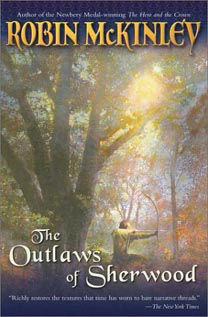
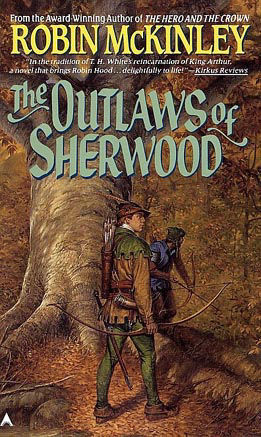
Author of The Outlaws of Sherwood
Clayton Emery
Author of The Beast of Sherwood and Robin and Marian mysteries
Professor Stephen Knight
Author of Robin Hood - A Mythic Biography and other Robin Hood scholarship
Professor Barrie Dobson
Co-author of Rymes of Robyn Hood
Main Sections
Main Page
Introduction & What's New
A Beginner's Guide
Robin Hood Tales
- Ballads & Stories
Wolfshead Through the Ages
- The History of Robin Hood
Search for a Robin Hood
Spotlight of the Month
Robin Hood - A Personal Journey
The Picture Gallery
Interviews in Sherwood
The Blue Boar Inn
- Message Board
Legendary Links
Pook's Hill
Information
Site Map
How to use this site
Search This Site
About the Author
My Biography
Send me an e-mail
Copyright
All text, unless otherwise noted, and title graphics - © copyright Allen W. Wright, 2004.
Cover art is used without permission for the purpose of criticism and review.
|
ROBIN McKINLEY
Conducted
and transcribed by Allen W. Wright
Robin McKinley has written several critically-acclaimed fantasy novels,
among the best known are The Blue Sword (1983), The Hero and
the Crown (1985 -- a Newbery award-winner), Rose Daughter (1988)
and Spindle's End (2000). Her Robin Hood novel, The Outlaws
of Sherwood was published as a hardcover by Greenwillow Books in 1988
and as an Ace Books paperback in 1989.
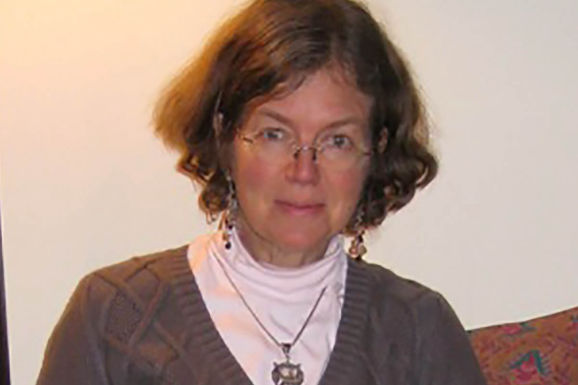
Born into an American military family, Ms. McKinley now lives in England
with her husband, fellow author Peter Dickinson. Robin McKinley's official
website is www.robinmckinley.com
This interview was conducted through e-mail and concluded on Sept. 14,
2002.
AWW: You've mentioned in a few places that as a child you
loved the Robin Hood legend. What things about the legend appealed to you
the most? And do you think that would still be true of children today?
RM: I think the main thing that appealed to me forty
or more years ago is the same thing that must appeal to most ordinary middle-class,
developed-world kids with indoor plumbing, TV, and homework, reading
Robin Hood today: a simpler, freer life on appealing terms. It's
not unlike the attraction of Arthur Ransome's Swallows and Amazons
or Kenneth Grahame's Wind in the Willows, a kind of uber- playing
house, with the excellent addition of fighting bad guys and being on the side
of justice and generosity. Even taking out the garbage -- if you're the
kind of kid who realises that you're still going to have to do this one way
or another, which I was -- must be more interesting in the greenwood,
when you could be eaten by wild boars on the way or something. I don't think
you really appreciate the excellence of hot showers and washing machines till
you're old, and when you're a kid a cold, lumpy bed made out of tree branches
seems like a perfectly fair trade for an absence of algebra tests. Most
of the stuff grown-ups make you do when you're a kid is, if not quite pointless,
its point is at least a long way off, after you're eighteen or twenty and
out of school (and/or doing your own laundry). Robin Hood is also
a dream of being the kind of grown up you're already pretty sure at heart
you're not going to be, partly because there aren't any forests left that
are suitable for it, but partly because you're uneasily aware of being successfully
indoctrinated into the system. After all, there was a lot less to keep Robin
Hood at home. No TV. No computer games. No pizza delivery. Maybe you
can live without the joys of pulling the sheriff of Nottingham's nose after
all. But it's a lovely fantasy, and I wouldn't have wanted to miss it.
AWW: As you mentioned, historian J.C. Holt has said that Robin
Hood is whoever the audience and the storyteller needs him to be. Who is
Robin Hood for you?
RM: He's the fellow who pulled the sheriff of Nottingham's nose
and got away with it. He's the fellow who bucked the system successfully.
He's the little guy who took on McDonalds or Microsoft and won.
He's also another version of one of my biggest preoccupations -- the ordinary
hero. I talk about this at every opportunity (have a look on my web site
www.robinmckinley.com
for other examples): I personally think that fearless, flawless heroes
are a snore. Heroism is something that takes a lot of energy, and the only
heroes I'm really interested in are the ones that have bad nights sometimes,
lying awake at 3 am and wondering if they're doing the right thing. Heroism
costs, if you're a mortal, and we're mortals. (Seven-league-striding
type heroes who laugh at death and lop off the heads of wicked despots before
breakfast aren't going to be lying around the house reading wussy
fiction .) Legends -- and fairy tales -- are exciting and thought-provoking,
with their stereotyped characters representing good and evil, virtue and
vice, good mothers and bad stepmothers, good kings and bad wizards, but
when I get down to it, I want to flesh them out and make the them human.
Andrew Lang's Beauty and the Beast or Child's Robin Hood
and Guy of Gysborne is only some of one version of
the story. The Robin Hood I grew up with was Howard Pyle's, and
the big thing I had against it is that all the merry men seemed to
be extraordinarily tall, extraordinarily clever, extraordinarily brave,
extraordinarily good at everything. Booooooring. The concept was great,
but the characters needed a little work.
AWW: Many versions of the legend which focus solely on Robin
himself. But The Outlaws of Sherwood wonderfully develops the other characters
in the band. In your "Ordinary Heroes" article [which appears in Robin Hood:
The Many Faces of that Celebrated Outlaw, the catalogue for the International
Robin Hood Exhibition, organized by Dr. Kevin Carpenter], you said that
Little John was your favourite character. What's the appeal of Robin being
part of a team as opposed to being a solo hero?
RM: Another important aspect of Robin Hood for me -- an aspect
that was important when I was a kid and stayed with me even as I grew up
and lost patience with Howard Pyle -- is that he is a leader. And
you can't lead unless there is someone else around for you to lead.
The ordinary-hero business applies to leaders as well: the finest, clearest-seeing,
most worth paying attention to leader is also lying awake at 3 am occasionally,
wondering if he's doing the right thing. He better had be, or he's got
a problem, something that seems to me has gone wrong with a lot of charismatic
human leaders, now and throughout history. They start to believe their own
hype, and stop worrying. Deadly error. In Outlaws I tried to write
a story about a reluctant leader, a leader who inspired, who brought out
the best in people, who made them willing to risk danger and discomfort for
something they believed in -- and who didn't abuse the tremendous
power this gave him.
AWW: Obviously, Marian was an important figure for you. Often
in the legend, she's a very strong character. But in the children's books
of the last few hundred years, she's become a damsel in distress. How did
you come to craft your Marian -- one of the strongest and most interesting
ever? And you've mentioned coming under some criticism for your Marian. How
do others see Marian versus how you see Marian?
RM: . I'm not a scholar, and there are lots of Robin Hood
s out there I haven't read, but I've read quite a few, and I'm startled
at your statement 'Often in the legend, she's a very strong character.'
Not in the legends I know. (According to Professor Holt "Marian only made
her way into the legend via the May Games and that not certainly until the
sixteenth century." I suppose it also depends on how old a story has to
be before you start calling it a legend.) There's one reference in
one reasonably elderly ballad that I've seen that makes a passing
reference to her out there having adventures with the boys (-- outlawsandhighwaymen.com/drayton.html--
where you'll find an excerpt from Poly-Olbion by Michael Drayton, published
in 1622) but generally speaking, up till pretty recently, she's been at
home knitting or grilling the venison steaks or something, if she's there
at all. Marginal Marian would be a better name for her than Maid Marian.
As for where my Marian came from, she's a very straightforward progression,
given my shape of mind. I wanted a self-doubting imperfect inspirational-leader
hero, and I wanted him to have a sweetheart whom he honestly needed
, and who was -- equally honestly -- a full person, and a fully important
member of the band of outlaws, in her own right. Again -- for my shape of
mind-given that I wanted Robin to be a genuine leader, someone whom people
wanted to follow, and who took responsibility for what this
meant for both himself and his followers, I kind of had to take his
marksmanship away from him, because being a brilliant marksman too would
start taking him toward that too-good-to-be-true, bored-now place that I
as a reader object to. Who better to give that marksmanship to than his
true love, who needed something to do/be anyway? Mind you, it was nowhere
near that calculated-or that rational. My Robin turned up the way he turned
up, and so did my Marian. I'm just not in the least surprised.
AWW: In your afterword and elsewhere, you've mentioned the shortage
of women both in the traditional legend and especially in Howard Pyle. You've
added several female Merry M -- err, Women to Robin's band. What went into
creating these characters, particularly Cecily?
RM: Again, I didn't set out to do it deliberately. It was inevitable,
if I was going to tell a Robin Hood story, that my story would have important
women in it. If there's ever a book published with my name on it that
doesn't have important women characters in it, call the police.
I've been kidnapped, and someone has stolen my name.
I can't give you much more than that for Cecily, either. (For
anyone who is reading this who hasn’t read Outlaws yet but might,
stop reading now.) But I went in to writing this story,
as I go into writing any story, with some ideas about how I'm guessing
the story may go (I am frequently wrong), and two of them in this case came
together in Cecily: that Will Scarlet, the runaway aristocrat, had a rebellious
sister whose fate was mysterious; and that it seemed very likely that a
young woman might, to improve her chances of being accepted into a band of
mostly merry men , present herself as a young man. It's important
to my concept of the story that Cecily, when Cecil is finally unmasked,
is right , that she wouldn't have been accepted -- not to the extent
she has been -- if they'd known she was a woman. If Robin Hood is what
each reteller needs him to be (pace Professor Holt's thesis in his excellent
Robin Hood ), one of the things I needed him to be was embroiled
in an ongoing argument about the place of women in society, which is very
alive to me in this society.
AWW: In the legend, there's often a feeling of anti-clericalism
running through the tales. Robin plunders corrupt bishops and abbots. In
your novel, you make Sir Richard's debt owed to a secular landlord, as opposed
to the traditional abbot, and also have Robin caution against robbing the
clergy. Why did you chose this direction?
RM: This is a very mild attempt at historicity on my part. I
have a problem with all large, administered systems, and so I have
a problem with the Christian Church, but our society doesn't have
the problem with an oppressively all-powerful Christian Church the way the
society that produced the first well-known gush of Robin Hood stories and
ballads did. I feel that the anti-clerical thread in Robin Hood is pretty
worn out. I'm sure that you could do an ends-to-middle, like thrifty households
used to do with old sheets, and revitalise the Christian Church's importance
either for good or ill within a framework of a Robin Hoodish retelling, if
you wanted to, but that wasn't anywhere my story wanted to go.
AWW: What was the hardest thing about writing The Outlaws of Sherwood?
RM: Probably balancing my basically bleak notion about what happens
to idealistic rebels against my desire to have a satisfying story that comes
to some facsimile of a partial happy ending. There are few things
I dislike more than a story whose author has obviously been determined
to make it end badly, whatever the story wants; on the other hand there
are some stories which thunder, or even walk softly, toward an entirely earned
and inevitable appalling conclusion, and that's fine, but I rather
hope I'm never forced to write one. I hated getting through the
Guy of Gisbourne stuff in Outlaws and killing almost everybody off.
I knew it was coming, I knew that was what the story wanted (and would demand,
if I tried to get bolshie about it), but didn't it just half kill
me, writing it. At the same time . . . it always was going to
end in tears. That's one of the both glorious and heart-breaking things about
Robin Hood as I understand him (whether he's one of the ones who shoots well
or one of the ones who doesn't): he knows this. He does it anyway.
He has to.
I have occasional fantasies of writing Outlaws Part Two
but it would probably end even worse, so chances are I will contrive never
to get around to it. (I can tell you my Robin isn't going to die by female
treachery, however. It might almost be worth thrashing myself through
Part Two just to make this point.)
AWW: For you, what's the most defining moment in the book?
RM: Ah. Here's another place where anyone who hasn't read Outlaws
yet shouldn't read any more here. My defining moment is when Cecily's
badly thrown knife distracts the exhausted Guy of Gisbourne just long enough
to give the equally exhausted Robin the one last chance he needs, so our
few remaining heroes win after all, even at the colossal cost of the preceding
battle -- and while Marian may or may not be dying in Friar Tuck's secret
sanctuary. This is also the scene in the book that most often renders traditional-Robin-Hood-lovers
the most rabidly incoherent (and, I might add, abusive) with rage. Robin
Hood needs help to defeat Guy of Gisbourne! And he gets it from
a GIRL!!!!! To me it's far more interesting, far more poignant, far more
satisfying, to have that battle won at the last possible moment,
balanced on a knife-edge -- literally in this case --and won, furthermore,
from an unexpected source, and a badly wounded, half out of her mind with
blood loss and fear, source, at that. One of the things Outlaws
is about -- let me repeat -- is that of a group with a leader; if the leader
can do it all himself, if he doesn't need the group, why does he
bother? This comes back to ordinary heroes again too: Robin Hood and
his band have, in fact, overcome enormous odds to win at all. They
shouldn't have. In the 'real world' they wouldn't have. Even in my pseudo-medieval
never-never land, if the story is going to have any of the shock of the
real in this one, it had better feel real. And in
this case this means death and pain and exhaustion and despair. And doing
what you have to do anyway, however wretched you're feeling. That's
heroism. That -- let me also repeat -- is one of the things the book
is about.
It also makes me pretty nuts that the people who get bent over the fact
that Robin needs some help seem to think that by the mere fact of his needing
help his honour or his leadership has been impugned or something. Robin
-- all his folk -- have proved many times over that they're worth three or
a dozen of any ordinary mercenary thugs, like Guy and his band. Robin
is betrayed at the end by nothing that he does -- his staff breaks!
I was very careful about this, because I didn't want to undermine
either his courage or his authority: he's standing there challenging Guy
to do his worst when Cecily throws her knife. (I hadn't thought of this
before, but I dare say it's also my poke in the eye to all those genderist
thugs that have used and passed on the treacherous-prioress version of Robin's
death.)
AWW: Is there anything else you'd like to add?
RM: I said at the end of the afterword in Outlaws 'My Robin
Hood is meant to be neither absolute nor definitive -- nor historically
satisfying. But I hope my readers may find him and his company persuasive
and congenial.' I think it would have been a little churlish to put it
this way in the afterword, but rationally that should have read 'I hope
some of my readers may find him and his company persuasive
and congenial' -- and my thanks to all of the readers who have told me in
the years since the book was published that they find him so. I will add
to that (adapted from my answer to What single thing would improve
the quality of your life? in the 'Imaginary Interview' on my web site),
that for those of you who do not, please remember that there is a crucial
difference between 'this book doesn't work for me' and 'this book sucks
dead bears'. It's always disheartening to read a letter from someone who
hated something you've written, but it's fairly maddening to be told that
you're wrong. Outlaws isn't wrong. It's a particular
take on an old tale that works for some people, and not for others. Like
all stories. Hey, I have it on excellent authority that there are even people
who don't like The Lord of The Rings, astonishing as that may sound.
. . .
AWW: Thank you, Ms. McKinley -- both for taking part in this interview
and for writing a highly-enjoyable Robin Hood book.
Please visit Robin McKinley's Official Website at
www.robinmckinley.com
Read my Spotlight review
of The Outlaws of Sherwood.
Order
The Outlaws of Sherwood on Amazon.com
Order it on Amazon.co.uk
|