Interviews in Sherwood

Amy S. Kaufman

Interview conducted and transcribed
by Allen W. Wright

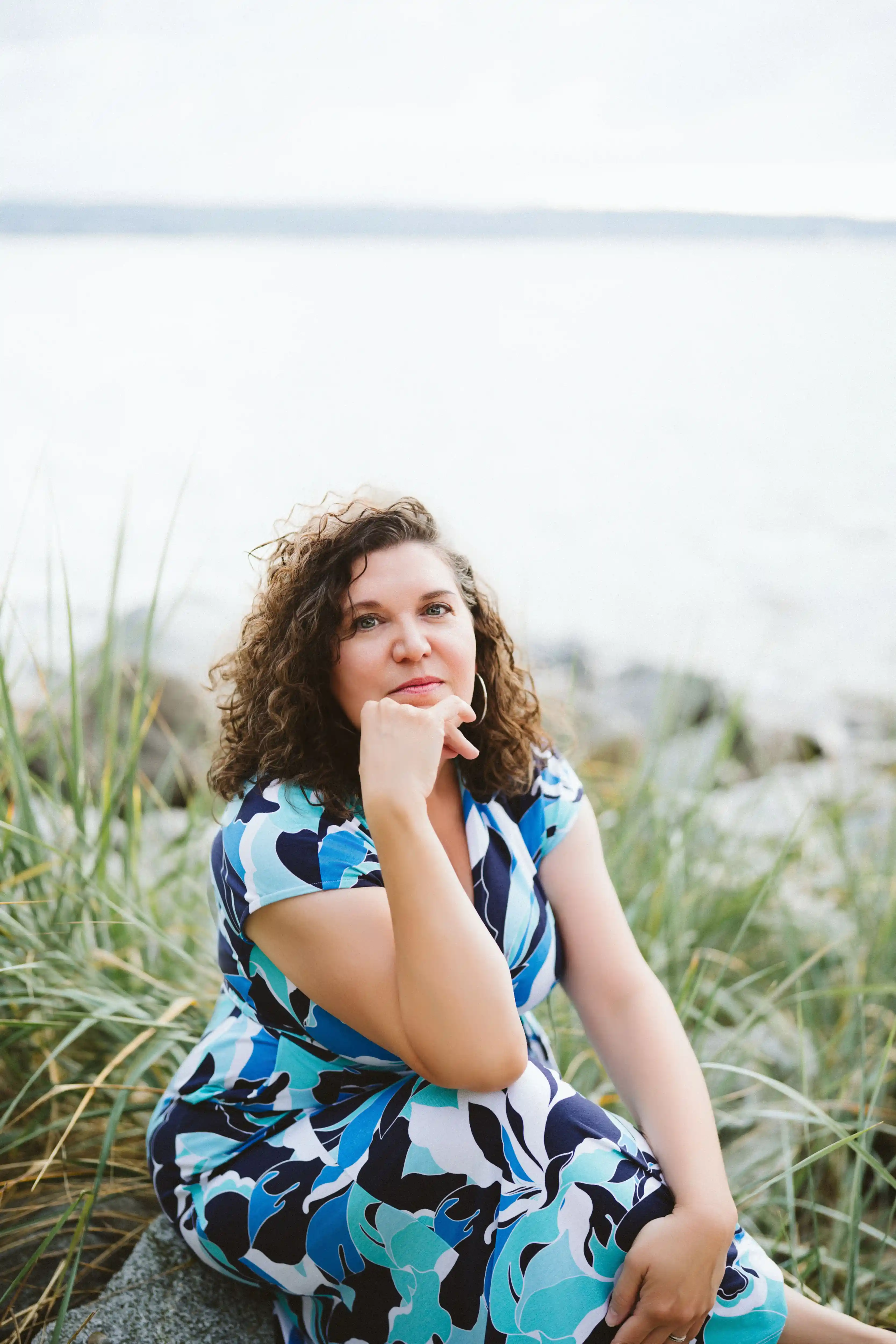
Amy S. Kaufman

Introduction

Amy S. Kaufman is a former English professor who now writes full time. Her first published novel is The Traitor of Sherwood Forest which was published in 2025 by Penguin Books.

She hold a PhD in medieval literature and has written about the medieval period and medievalism for a variety of publications. She is the co-author of the non-fiction book The Devil's Historians: How Modern Extremists Abuse the Medieval Past (University of Toronto Press, 

Originally from the United States, she currently lives in British Columbia, Canada.

Her website is www.amyskaufman.com

This interview was conducted by e-mail in April 2026.

Encountering Robin Hood ... and the Medieval Robin Hood

AWW: What was your introduction to Robin Hood? Did it resonate with you and if so, why?

ASK: Like many people who encounter Robin Hood at a young age, I first met him as a cartoon fox. I was pretty obsessed. Part of me wanted to marry him, and part of me wanted to be him. A lot of the women I know feel the same way. I think he was so appealing because he was our first introduction to a gentle, genuinely clever hero, one who had more brains than brawn.

AWW: What was your reaction when you encountered the medieval Robin Hood legend for the first time?

ASK: Shock and disbelief, but then a strong fascination. As an Arthurian scholar, I already understood how much medieval legends change over time—the Arthur in Malory's Morte Darthur, who commits incest and kills a bunch of children to prevent Mordred's birth, is a far cry from the young, innocent Arthur of The Sword in The Stone. But the disconnect between the medieval and modern Robin Hoods felt really dramatic. I immediately wanted to understand everything about when, how, and why he changed, and what medieval people loved about him, even though he was much less virtuous and much more violent than he is today.

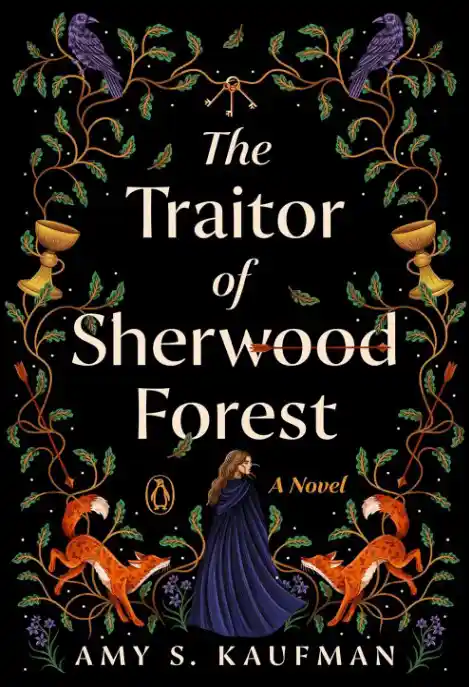
The Traitor of Sherwood Forest, cover art by Micaela Alcaino

Adapting Medieval Legend and History

AWW: In writing The Traitor of Sherwood Forest, you've weaved bits of Robin Hood and the Potter, the Gest, Robin Hood and the Monk, the Gisborne and Death ballads together. What was your process in selecting which bits of the original ballads to retell, and how to fit them together in a narrative whole?

ASK: This was a really intricate process, especially since the ballads have so many contradictory versions of events. I focused on using the pre-1500 literature and only used later ballads if they had medieval roots, such as the Gisbourne ballad and the story of Robin's death, which expands on the last lines of the medieval Gest of Robyn Hode. My intent was to stay as close as possible to the legends of Robin Hood before he was transformed into a nobleman, because his motivations completely change with that shift.

   A disinherited Robin Hood fighting to get his land back has a simple psychology. He's not necessarily opposed to monarchy or religion; he just wants to replace bad rulers with good ones (and get his stuff back). But the medieval Robin Hood is a true outlaw, and his psychology is much more interesting to me. He is against the church and the nobility as political institutions, and all of his actions are meant to disrupt. Once I decided on Robin's motivations within my novel and imagined his reasons for doing what he does in the ballads, the events I needed to use clicked into place.

   However, I also had to plan around my heroine, Jane, who works as a servant in one of the king's estates. I would have had a hard time putting in her huge battle scenes or sending her to Nottingham, so in the end, I chose events that Jane could be a part of, or at least adjacent to, without straining credulity. This lent itself to a close narrative tied to the local setting, focused on Robin's influence on a certain set of people. And that really served my purpose, which was, ultimately, to try to imagine how medieval people would have felt about Robin Hood.

AWW: I was intrigued by the time period you chose. In the medieval ballad the king's name is Edward. The early writers mentioned a time period for Robin Hood. A lot of times when writers want to break from the Hollywood version of the legend set in the 1190s, they go to a later King Edward — Edward II or Edward III (in the 1310s, 1320s and 1330s). But you harked back to medieval chronicler Andrew of Wynton's dating of Robin Hood and Little John to the reign of Edward I in the 1280s, and specifically the background given by chronicler Walter Bower in that they had fought in Simon de Montfort's rebellion in the 1260s. What was most compelling about this setting for the novel?

ASK: This was a fun puzzle to solve. Andrew of Wyntoun and Walter Bower are writing around the first half of the fifteenth century, near the time of the Geste, which names King Edward but doesn't tell us which one. So, I worked from the supposition that these texts were all conversant with the same version of the legend (especially since Bower angrily denounces popular Robin Hood ballads of the time). Since my project was to understand what kind of hero medieval people thought Robin Hood was, it made sense to take the medieval sources at their word. 

   When I dug into historical events, the timeline made sense, at least in terms of the story I wanted to tell. Edward I was instrumental in the Second Barons' War. Although he first supported the barons' reforms, he eventually fought against the rebels and defended his father, Henry III. If Robin Hood fought for the rebellion against Henry, as Bower claims, then he might well be living as an outlaw when Edward I took his father's throne, five years after the capture and surrender of most of the rebels.

   Edward himself was also an excellent villain. He consolidated power and instituted new taxes on exports, then waged war on his neighbours, driving taxes higher still. (I swear I'm not drawing modern parallels on purpose!) Edward also had a woman kidnapped to stop a political alliance, he expelled the Jews from England, and, famously, he ordered the brutal execution of William Wallace. 

   Betrayal is an important theme in my book, and it's easy to see the seeds of that betrayal in Edward's early years, as people who had just survived a brutal civil war were further pressed for taxes, disempowered in government, and increasingly restricted in their own lives. You could see where an outlaw who wanted to overthrow the whole system, and who could disrupt the king and the church when most people couldn't, would be really appealing.

AWW:I see with Walter de Stircheley you used the name of the real Sheriff of Nottinghamshire and Derbyshire in 1274. Did you take any historical aspects from the real sheriffs (or shire reeves)?

ASK: You're the first person to notice this! Other than the general date range, the only criteria I had for selecting a real-life sheriff was, alas, that he only held the office for a few years. Spoiler alert.

   I did try to ensure that Walter had the duties and responsibilities of a medieval sheriff rather than a modern one. A medieval sheriff was a servant of the king and was, in part, responsible for collecting taxes and making sure that nobles did their part in foreign wars. In fact, I had to cut a small subplot with the sheriff, Sir Richard, and an edict called the "distraint of knighthood"—Henry III's law that landowners either had to become knights and serve the king's military ambitions, or pay a fine. Edward I was really into enforcing this, for obvious reasons, given all his wars. And the Geste actually makes a mention of it: when Robin suspects that Sir Richard was "made a knyght of force," this is what he means. 

   Unfortunately, most readers aren't all that interested in the political intricacies of land taxation. I hope everyone reading this is still awake!
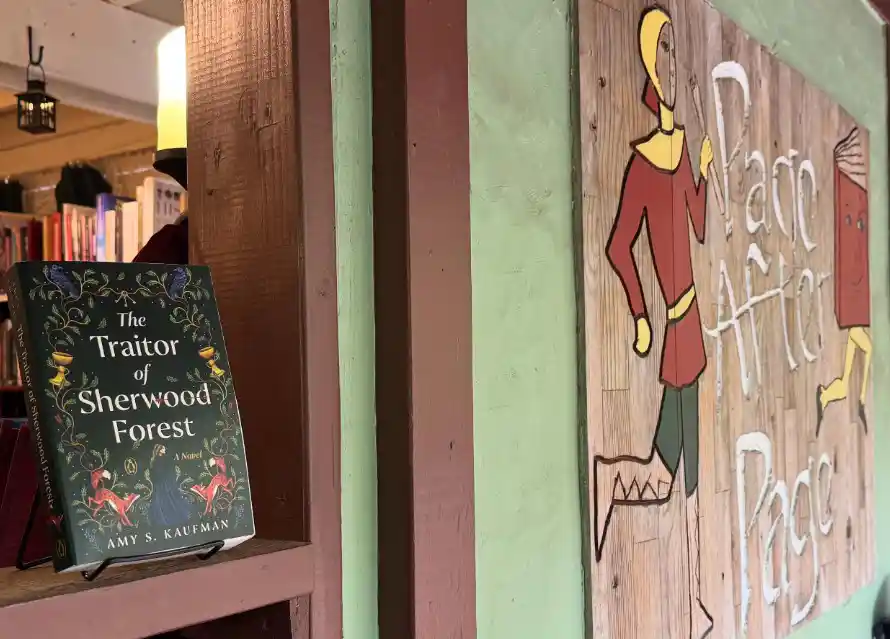
The Traitor of Sherwood Forest on display at the Maryland Renaissance Festival bookshop

A Peasant Girl Protagonist and the Novel Experience

AWW: What went into creating the main protagonist of the novel - Jane Crowe?

ASK: Most people ask me why I didn't just turn her into Maid Marian. But Robin Hood was the champion of medieval peasants, and it was really important to me that my heroine was one of them. As just the type of person Robin should be saving, Jane works really well as a lens for the modern reader, who goes in expecting a hero based on the legends she grew up with, but finds something altogether different.

   I did a lot of research into peasant life, since we so rarely see their perspective in modern fiction. People imagine that medieval peasant women did nothing besides child-rearing, but this couldn't be further from the truth. These women were the backbone of medieval society. They wove clothing, farmed, brewed beer, ran shops, and, like Jane, worked as servants. I really wanted to highlight this class of women, in part to disrupt any notion that they were isolated at home taking care of kids all day long. Frankly, most of their kids were also busy working! 

   I didn't have much to anchor Jane's character in the ballads, but there is an anonymous girl in Robin Hood and the Potter who carries Robin's pots when he's deceiving the sheriff's wife. Discovering her on a reread of that ballad was a happy accident for me, since it lent itself so well to imagining an invisible army of peasants helping Robin carry out his tricks.

AWW: What was the most surprising thing you experienced writing the novel and from its publication?

ASK: I came to love all my characters by the end of writing the novel. They were all grey and deeply flawed, but I understood every one of them and enjoyed exploring their motivations. So it's been interesting to see who readers fall for (the prioress), and who they hate (Little John, which bums me out because he was one of my favourites!) But when you let a novel loose into the world, it's in the hands of the readers after that. There are some readers who resent having their vision of a heroic Robin Hood shattered, but there are others who really love what the book is doing. You learn pretty quickly that your book is not going to please everyone! 

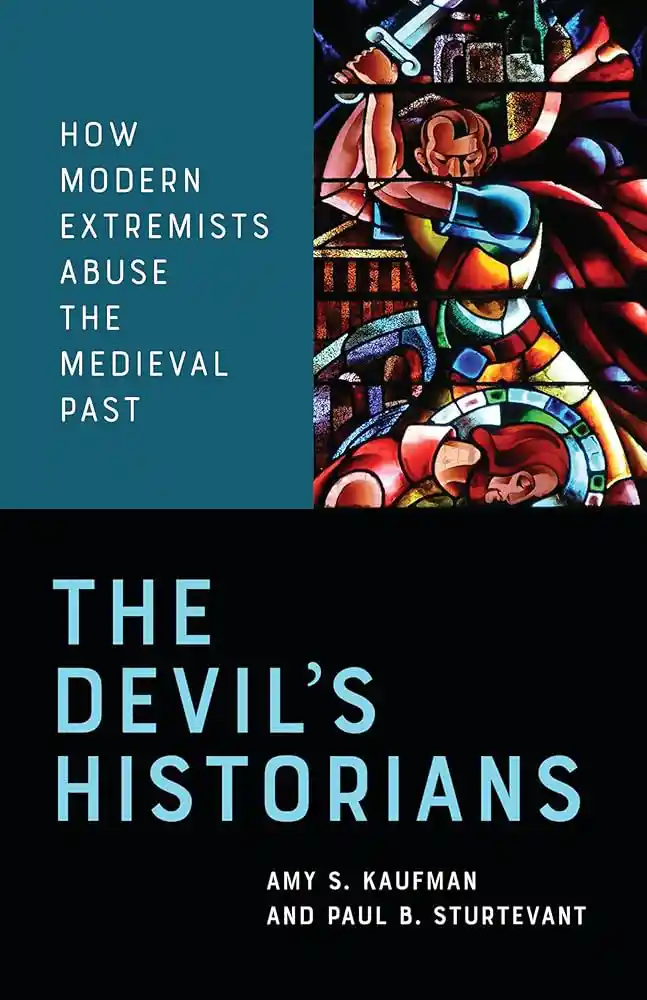
Cover to The Devil's Historians

Medievalism and What's Next

AWW: You've written about Medievalism in your non-fiction book The Devil's Historians (with co-writer Paul B. Sturtevant) what do you think are the most interesting and also the most dangerous medievalist fallacies around Robin Hood?

ASK: As far as I'm concerned, the most dangerous medievalism around Robin Hood isn't technically a medievalism –it stems from Robin's later conversion to nobility. The Robin Hood story we all know nowadays is about a charismatic aristocrat who fights for the oppressed and restores order. Politicians, populists, and elites seize on Robin Hood imagery and use it to pretend they're on the side of the people, when really, they're just looking to secure their own power and wealth. (The Robinhood trading app is a particularly ironic example of this.)

    The modern Robin Hood stories can trick us into believing that a celebrity, politician, or wealthy benefactor on the side of good can swoop in and save us. But in real life, positive change rarely comes from elites policing themselves. Change happens when ordinary people team up, band together, and fight back. The people who wind up making the most difference in the world are very often the ones whose names we don't remember.

AWW: What are you working on now?

ASK: I have a few medieval things in the pipeline, but the next book to come out will be in a modern setting. I can't tell you too much yet, but I will say that upending genres seems to be a habit of mine, and the next genre on my hit list is magic school. Stay tuned!

AWW: Thanks!

Amy S. Kaufman Books on Amazon

Buy The Traitor of Sherwood Forest by Amy S. Kaufman on Amazon.com

Buy The Devil's Historians by Amy S. Kaufman and Paul B. Sturtevant on Amazon.com

As an Amazon Associate I earn from qualifying purchases from the links associated with these interviews (at no additional cost to you).

Where to go from here:

If you enjoyed this interview, check out the following:

Contact Us

© Text and Location pictures, Copyright 2026 Allen W. Wright - All Rights Reserved
Other images are copyrighted to their respective rights holders and are used under fair use
As an Amazon Associate I earn from qualifying purchases from the links associated with these interviews (at no additional cost to you).

This page is a part of Robin Hood -- Bold Outlaw of Barnsdale and Sherwood