Adventures in History (and Literature)
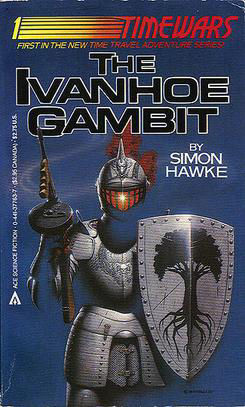
In the Time Wars future, war is a thing of the past -- quite literally. Instead of messy and destructive battles in the present, armies use time machines to drop soldiers into the great battles of history and evaluate their performance. It's on this basis that disputes are settled. The time travellling army has a great recruiting campaign too. You only have to sign up for a week's service.
The problem is that soldiers can spend 6 months in the past and return to the present only 5 minutes after they left. That means although they are six months older, only five minutes are counted towards their service record. It takes a long time to get out of the army. Four soldiers -- Lucas Priest, Bobby Johnson, Finn Delaney and Corporal Hooker -- are offered a chance for early discharges with substantial pensions. All they have to do is save history.
One of their bosses has gone rogue. Referee Irving Goldblum has travelled back to 1194 and captured King Richard the Lionhearted. Goldblum has undergone cosmetic surgery and take Richard's place in history -- with one major exception. Goldblum has no intention of dying at Chaluz in 1199. Such a major change would seriously damage the timeline. So, Priest and the others are to stop the fake King and keep history on course. They replace four people from the past.
Priest and Hooker take the place of Sir Wilfred of Ivanhoe and his squire. Finn Delaney with his martial arts skills (including the quarterstaff) and great height takes the place of Little John. And Bobby Johnson becomes Robin Hood.
Johnson discovers that the real Robin Hood was a drunkard and a poor shot. Robin was also completely dominated by Marian, the sheriff's wife -- the real leader of the Merry Men. When the fake Robin Hood and Little John join the Merry Men, some changes are in order. The outlaws are taught Asian martial arts and US Army discipline. The Merry Men are also given army-style crewcuts.
Unlike the man he replaces, Johnson as Robin Hood is a very good archer. But not good enough for a well-known story. He uses a high-tech guided arrow to cheat and split the arrow in the classic archery contest.
Contact Us